
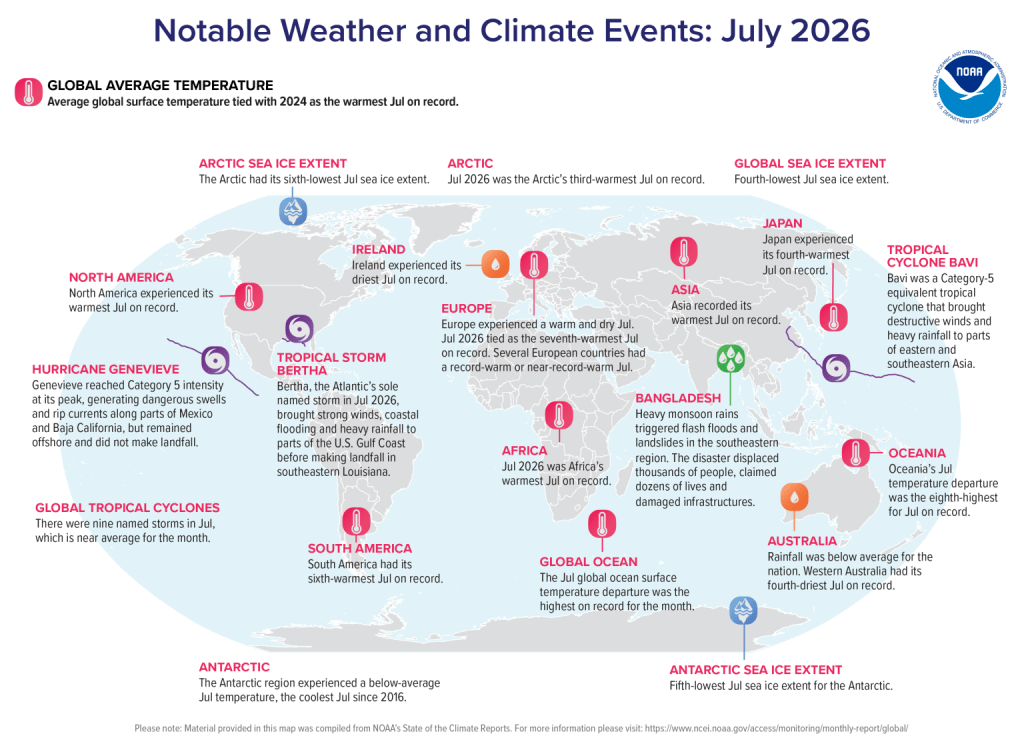
Even though September begins on Tuesday, this summer of climate shocks has yet to slow down: record-breaking heat and extreme weather are continuing across much of the northern hemisphere and thousands of people are missing and hundreds of lives are confirmed lost after a glacier’s collapse triggered a flash flood in Nepal and Tibet this week.
The silver lining of all of this devastation due to climate change-exacerbated extreme events is that it can open up windows of opportunity for real social change. I write all about this process in my recent book Saving Ourselves: from Climate Shocks to Climate Action, which draws directly on my work with Andrew Jorgenson on the AnthroShift. (note: this focus on the positive side of disaster is also why I call myself an apocalyptic optimist).
Although the research documenting how social change can be motivated by extreme events is limited, it’s growing. Arman Azedi and I just posted a pre-print that builds on this literature using a national sample of Americans to assess how climate shocks are related to civic engagement and support for climate science. We find that experience with climate shocks in the form of a range of extreme events is strongly associated with civic and political engagement. Although the relationship is statistically significant no matter political ideology, it is strongest for political moderates. Here is a summary of the main finding from this analysis (for the complete findings, see Table 4 of the paper):
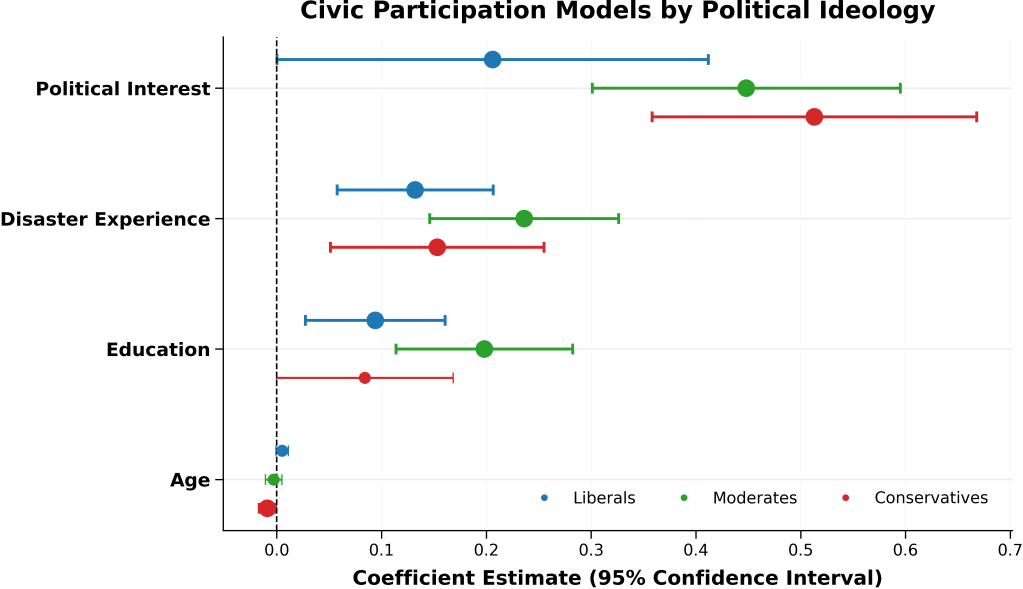
Although we find that experience with climate shocks is also associated with belief in climate science (ie that humans are causing climate change), the results are less consistent. Once again, the relationship is strongest for political moderates.
Our results point to a number of important take aways:
- Yes, climate shocks are associated with opening up opportunites for social change and climate action;
- This relationship is strongest for political moderates who are commonly referred to as the moveable middle; and
- the inconsistency in our findings around support for climate science suggests that misinformation may be playing a role around specific types of disasters.
Since I’m writing here about a pre-print (ie a paper that is currently under review but has yet to be peer-reviewed), the findings can still shift somewhat. No matter how we must tweak our analysis before publication, there is no question that more research is absolutely necessary to understand how climate shocks can bring about social change and what factors determine the outcome.


One response to “How Climate Shocks Motivate Social Change”
[…] and wildfires–which we’re just starting to experience. As I’ve written elsewhere, given our current trajectory, these climate shocks will most definitely get worse. Now that everyone is on the same page and no longer investing time and effort into resuscitating a […]
LikeLike