
I’m just back from our annual family vacation to the beach in Delaware. My sisters and I always go with our families the same week in July. For the first time ever this year, the ocean was overrun with jellyfish. Apparently, warmer waters are causing jellyfish to “move in and thrive earlier and more often and in bigger numbers.” Everyone who dared to swim came out with welts and my niece was stung so badly that she ended up in urgent care.
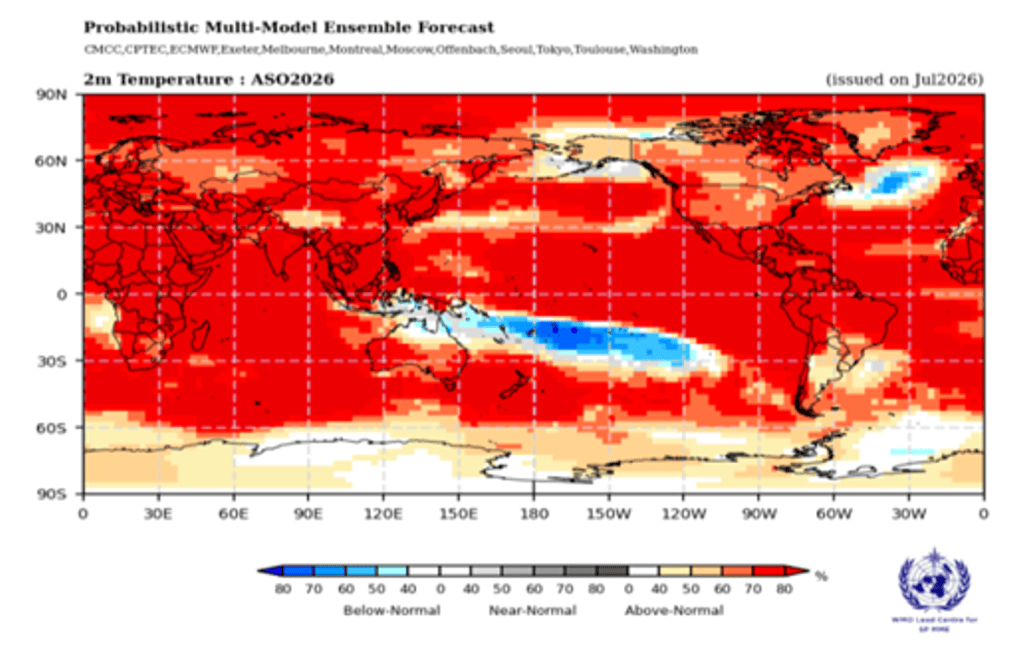
Like the heat domes, droughts, and wildfires that are plaguing the summer of 2026, this jellyfish outbreak is another effect of our warming world. Current predictions from the World Meteorological Organization (which produced the map above) show that we should be expecting “above normal temperatures and major changes in rainfall patterns” as the current El Niño continues to intensify.
Even though most people did not have severe reactions to jellyfish encounters, the local economy is definitely feeling the sting as many families decided to leave the beach early. For my family, discussions are already underway to move our annual trip elsewhere after 21 years at the same resort.
As the summer of 2026 rages on and we all feel some of the effects of the climate crisis in our daily lives, I am working on a paper that documents how experiences with climate change-exacerbated extreme events are associated with heightened levels of civic engagement and support for the science of climate change. This paper will join a growing literature that shows how personal experience drives social change on climate.
I’ll be presenting the paper at the American Sociological Association annual meeting next weekend and will share the final paper when it’s done.

