

Credit: MeCCO/CU Boulder
As our world warms and many of us feel the effects of the climate crisis first hand, the media coverage of climate change, which is making heatwaves, droughts, wildfires, and storms stronger, has declined substantially (also see the work of the Media and Climate Change Observatory at CU-Boulder, which created the figure above).
Members of the general public recognize this reduction in discussion about climate change in the media. The recent Climate Change in the American Mind Report documents how Americans hear about climate change much less now than they did four years ago.
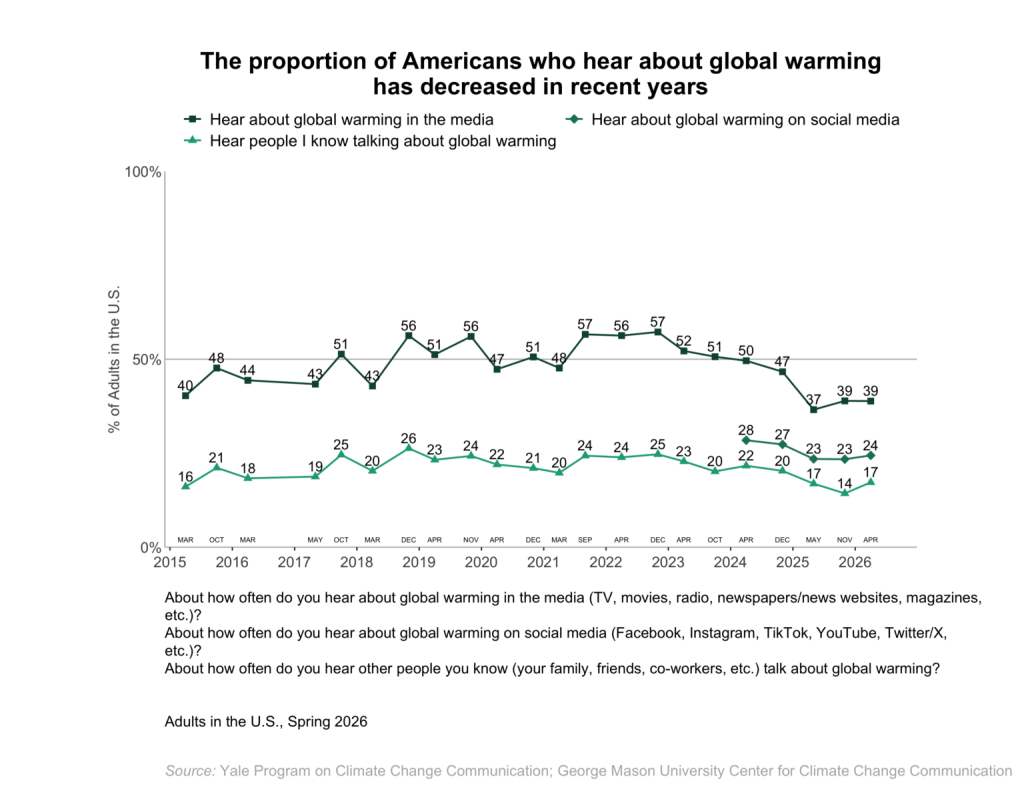
You might be wondering: why does media coverage of climate change matter if everyone is feeling the effects of the climate crisis more now than ever before?
Bernard Cohen famously wrote in 1963 that media coverage doesn’t necessarily tell us what to think, but it is “stunningly successful in telling us what to think about.” Given this fact, the decline in media coverage about climate change is particularly concerning as the media has the power to distract us from what is causing the climate shocks we are experiencing, along with the solutions that are available to limit the effects of the climate crisis.
While there are some efforts to refocus media coverage on climate in some countries–particularly ones that do not extract fossil fuels, like Japan–they are uncommon.
In the most recent episode of the Apocalyptic Optimist Podcast, I spoke with meteorologist Chris Gloninger about his personal experiences on the frontlines of the climate culture wars. Although Chris’ experience in Iowa was unique, it is part of this larger story about how climate communication and the science of climate change is being muted by fossil fuel connected interests, politics, and ideology.
Check out the episode here (or wherever you pod):

