
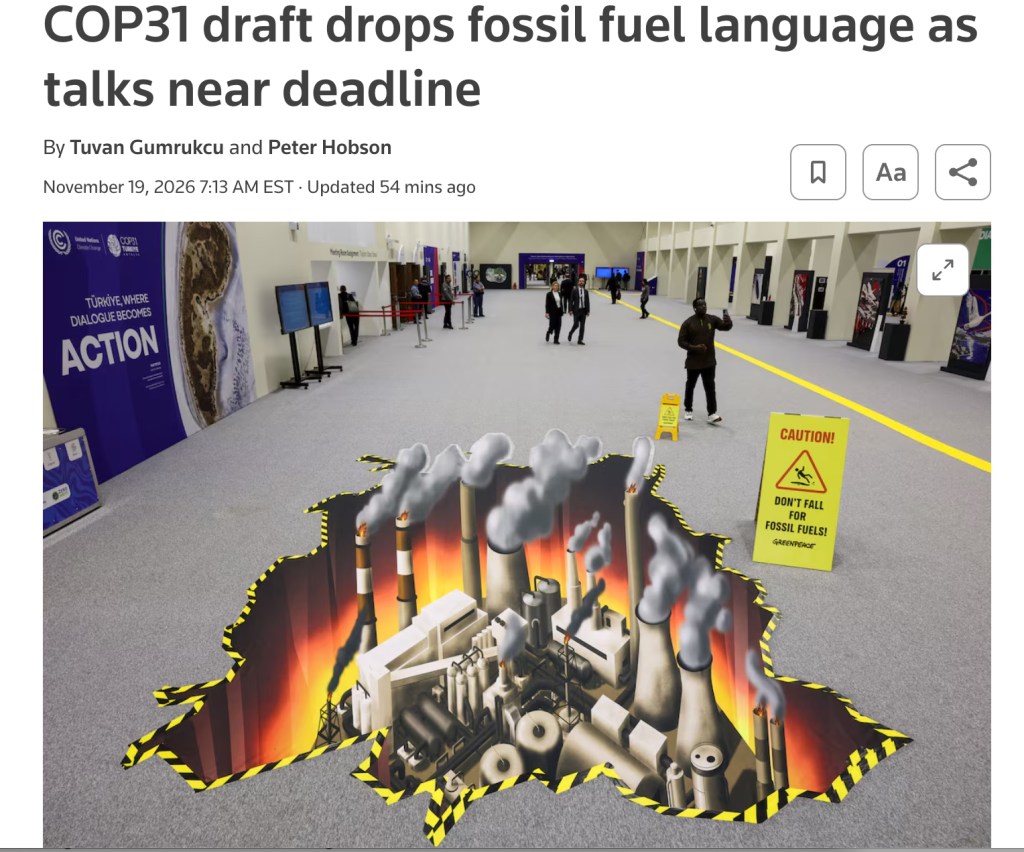
On Sunday, November 23rd, the 31st round of the climate negotiations (COP-31) fell apart as the Parties were unable to agree about how to mention fossil fuels in the final text (if at all). Most fossil fuel-producing countries have pushed the regime to remove any mention of a fossil fuel phaseout from the text and have leaned into technologies that capture and remove carbon, which have yet to be proven at scale. Although there is a lot more and louder disagreement this time around, the outcome from this round of Conferences of the Parties is, in many ways, just a repeat of the response to the climate emergency we have seen over the past few years. Given the lack of any tangible progress, concentrations of greenhouse gases have continued to go up in the atmosphere and climate shocks have hit more frequently and with more severity.
Last year, I chose not to travel to the climate negotiations (re-stating my position that it was a waste of carbon). Instead, I launched the COP-Out podcast. Over the two weeks that the climate conference was taking place in Brazil, I held conversations with top climate voices about the failure of the climate regime, discussing what is actually needed to treat the crisis like the crisis it is. The podcast included evergreen conversations with Lisa Schipper, Rod Schoonover, David Ho, Friederike Otto, Katharine Hayhoe, and Amy Westervelt (you can tune into them all here or wherever you Pod).
Climate policy failure is not only taking place at a global level right now. This week, we watched as many democratic Senators in the US (including some so-called climate leaders) failed to push back against fossil fuel expansion. Instead, they voted in support of the Bipartisan American Affordability and Jobs Act of 2026–the BAAJA bill–which will speed up the construction of pipelines, data centers and mines on public lands (and more). The bill is now moving to the House to be rammed through during the lame duck session before the newly elected and more progressive Congress takes office in January.
Given the lack of international coordination to reduce greenhouse gases and this new policy in the US that will lead to further expansion in fossil fuel infrastructure, we should expect that the climate crisis will continue to worsen and climate shocks will come even more frequently, hit with more severity, and affect more of us.
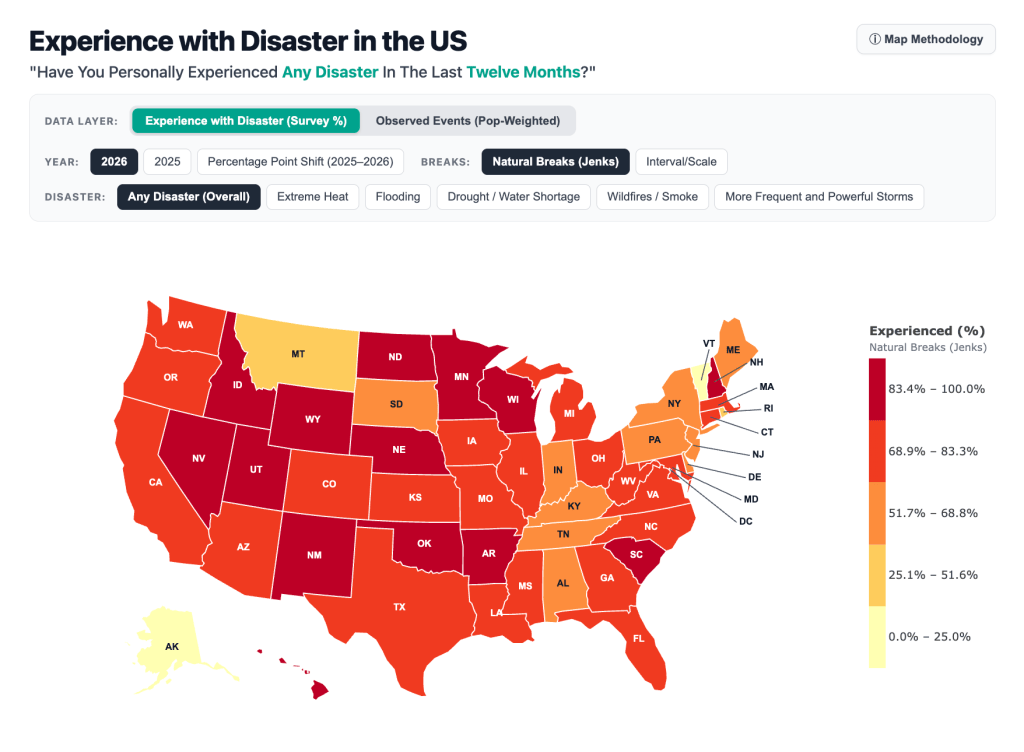
This week, my team posted a “Disaster Dashboard” that maps how Americans have experienced disasters. The dashboard presents data collected through our national surveys in 2025 and 2026, which clearly show how the experience of all sorts of climate change-exacerbated extreme events has grown over the past year in the US.
BONUS Content: For a broader view of democracy in the US and the battles that are still to come (which will, no doubt, affect how we experience and respond to the climate crisis), check out my new piece in The Guardian: Trump inspired a blue revolution. Can Democrats meet the moment?

