

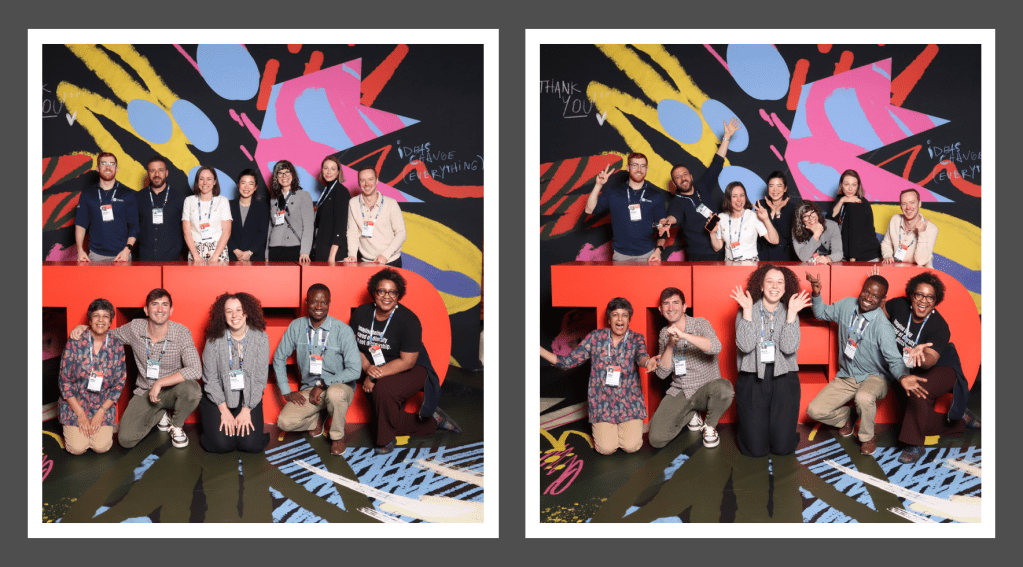
I was invited to TED2026 as part of their ‘Democracy Delegation’ this past week. Even though I gave a TEDTalk in 2024 at TED Countdown in Brussels, I was not prepared for the abundance of ideas and absolute overwhelm that are the hallmarks of a week-long TED conference.
In contrast to the climate-focused Countdown, talks on the main stage ran the gamut, including education, healthcare, bullying, and music.
AI was also heavily represented in talks over the 5 days:
- How AI will take over the world and automate our decline,
- How AI can save the world,
- How AI will never replicate real consciousness,
- How AI is being used to create a ‘high-utility virtual cell,’ and
- How AI makes it possible to build a better baby (for those who can afford it).
Attending TED2026 you were left with the sense that the world is not facing a crisis of inequality with the growing threats of hunger and war. There were some talks that highlighted democratic successes. I was particularly inspired by the talk by Amy Bowers Cordalis about the ways the Yurok Tribe employed a range of tactics—including protest and litigation—to free the Klamath River. And Hongyi Li presented a fascinating talk about how his team is helping to increase civic capacity in Singapore.
Unfortunately, the severity of the crisis facing democracies around the world along with the worsening climate crisis—aka the current polycrisis—were notably absent from the main stage.
I had the opportunity for some valuable one-on-one conversations with other members of the democracy delegation and speakers during breaks. We discussed our collective interests in combating misinformation and empowering citizens against growing autocracy. Unfortunately, these important conversations only took place on the loop around the conference during breaks and not in the inner circle where they could do the most good.
While there will be an event organized by the vertical focused on democracy in Philadelphia this summer, I believe that the meeting of over 1700 changemakers from around the world was also an opportunity to spread ideas about the global polycrisis and how we can work together to solve it.

