
Whenever I speak about civic and political engagement in America, I always start by discussing the most common way that Americans participate in our democracy: voting. Even though many people choose not to vote, it is still one of the most common forms of engagement and an act that most people do at least once in their lives.
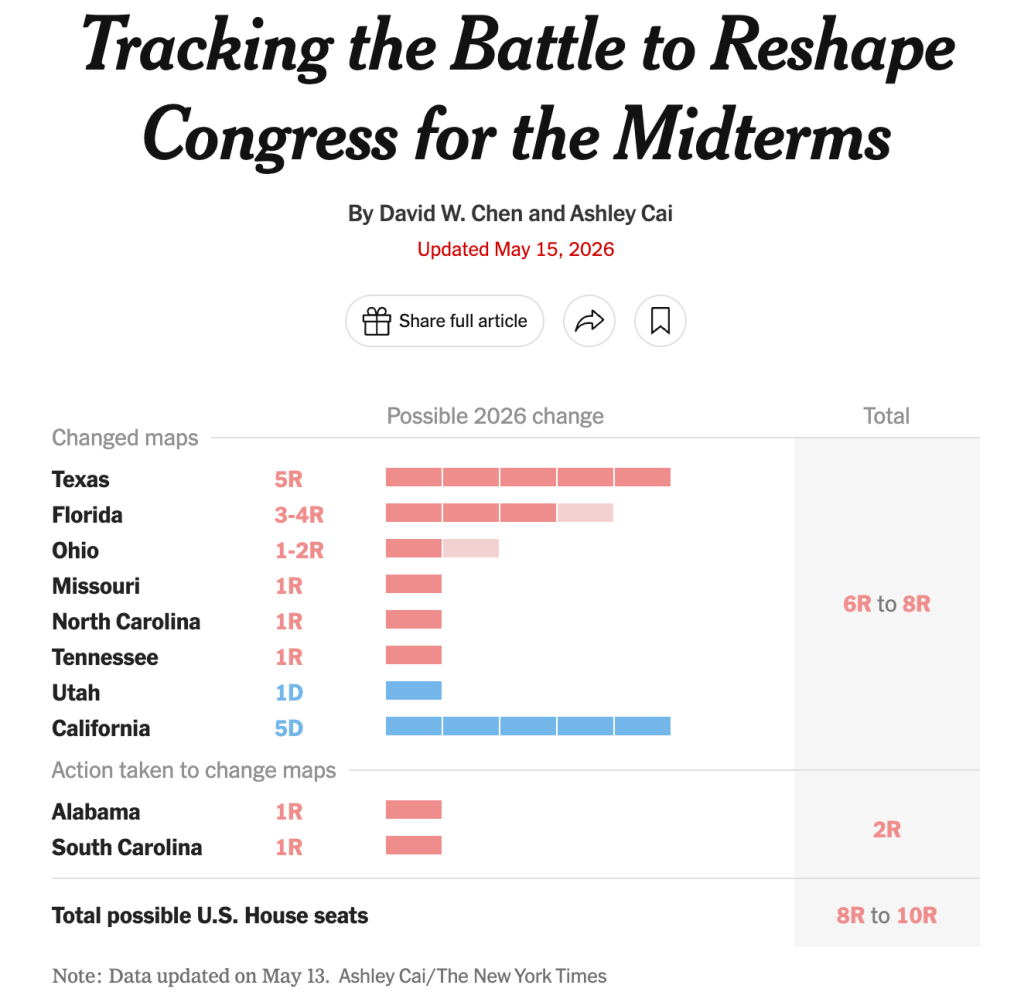
But what happens when access to voting and representation in political districts becomes less democratic? In the wake of the Supreme Court’s Callais decision, which has weakened protections in the Voting Rights Act, numerous southern states are moving to redraw their Congressional maps to favor white voters. Kevin Morris at the Brennan Center summarizes the implications: “Minority voters will now be left with a diminished voice in American politics, rolling back half a century of steady progress toward racial equality in voting practices.”
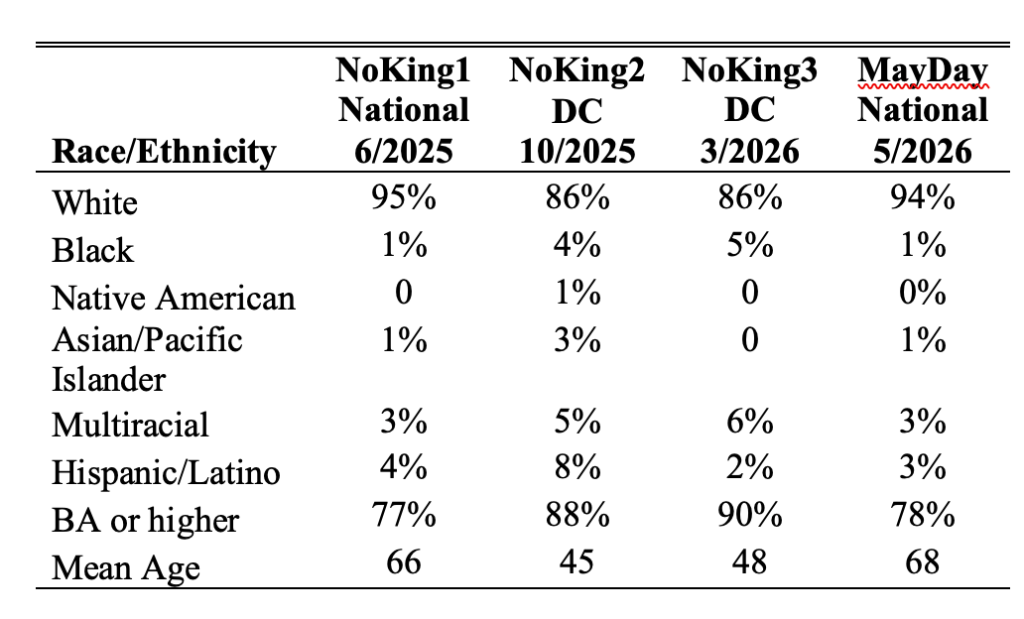
That said, disenfranchising Black voters is likely to mobilize them to organize and to protest, which could help to expand and diversify the pro-democracy movement. Although we’ve seen millions of people participating in protests against the Trump Administration and its policies during national days of action, participants have been predominantly White, highly educated, and middle-aged (or older). Here are the demographics from the data we’ve collected from 5,204 participants in days-of-action during Trump2.0:
Already this weekend, a protest has been called for Montgomery, Alabama and thousands are expected to attend.
This moment offers an opportunity both to expand the movement to resist the Trump Administration and its policies and to build solidarity, which are both necessary components of a broad pro-democracy movement. While redistricting efforts across much of our country will politically disenfranchise many Americans, it may be the shock we need to work together to save our democracy.

