
As our country celebrates its 250th anniversary, we are living through a particularly fraught period of US history with attacks on democratic participation and freedom of speech coming from inside the federal government.
Across the country, the effects of the Supreme Court’s recent decisions, which weakened protections in the Voting Rights Act, gave the executive branch power to fire members of independent agencies, and struck down campaign finance limits are all reverberating. These judicial decisions are only one part of what the New York Times has called a “relentless assault” by the President and his administration on the electoral process in America.
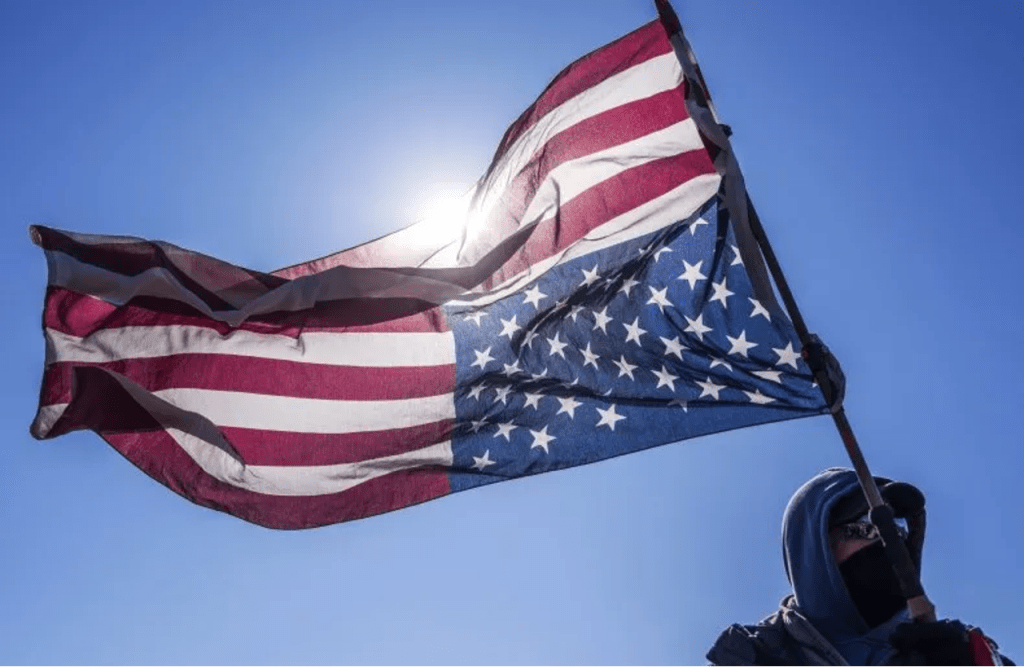
At the same time, the administration has followed through on threats to target peaceful protesters in an effort to muzzle criticism and intimidate Americans out of public expressions of resistance (for advice about how to stay safe when you protest, read this piece).
We saw these efforts play out in two states in June:
- In Minnesota, 15 anti-ICE protesters were charged with conspiracy against the US government for protesting and holding open the door of an ICE facility during a peaceful protest. Defending the charges against activists engaging in civil disobedience, Minnesota U.S. Attorney Daniel N. Rosen responded: “Whether or not they actually, at the end of the day, cause bodily harm is not the measure of whether or not they committed a serious federal crime,”
- In the ‘Prairieland’ case in Texas, 8 activists were sentenced to a combined prison sentence of 450 years for protesting on July 4th 2025 at an immigrant detention facility. Although the plan was to set off fireworks at night as a noise demonstration in solidarity with the detainees, everyone did not follow the plan: some of the protesters also vandalized cars and other property at the site and one activist, who had come to the protest with a gun, shot a police officer in the shoulder. Even though the activists did not know one another, they were sentenced as an “Antifa cell.” Those who were peaceful and disbursed when asked (and before any guns were drawn) were given sentences that were significantly longer than expected. Some of the evidence against these peaceful protesters was that they published a zine and participated in a leftist book club.
These cases show how the President’s executive order that declared the abstract and undefined ‘Antifa’ a domestic terrorist organization is being used to target and prosecute critics and opponents of the Administration. Americans can now be charged for participating in conversations on Signal, in progressive book clubs, and for producing materials that are critical of the current administration.
These cases are trial balloons for how the Administration can effectively silence and persecute its critics. This type of repression involves limiting some of the central components of democratic participation in America: voting, free speech, and peaceful assembly.
The right to participate and criticize peacefully are built into our Constitution. As research from the Civil Rights movement teaches us, movement opponents (in this case, the state) will tactically adapt to neutralize any threats to its power. The most effective response to this type of political repression requires embracing new tactical forms and working together. We are already seeing indications that activists are getting bolder in their resistance and my research has been documenting how activists are becoming more supportive of employing peaceful disruption as a tactic. In other words, what comes next may surprise us all.

