
What I learned from Stefan Rahmstorf’s keynote at the GLEN conference.
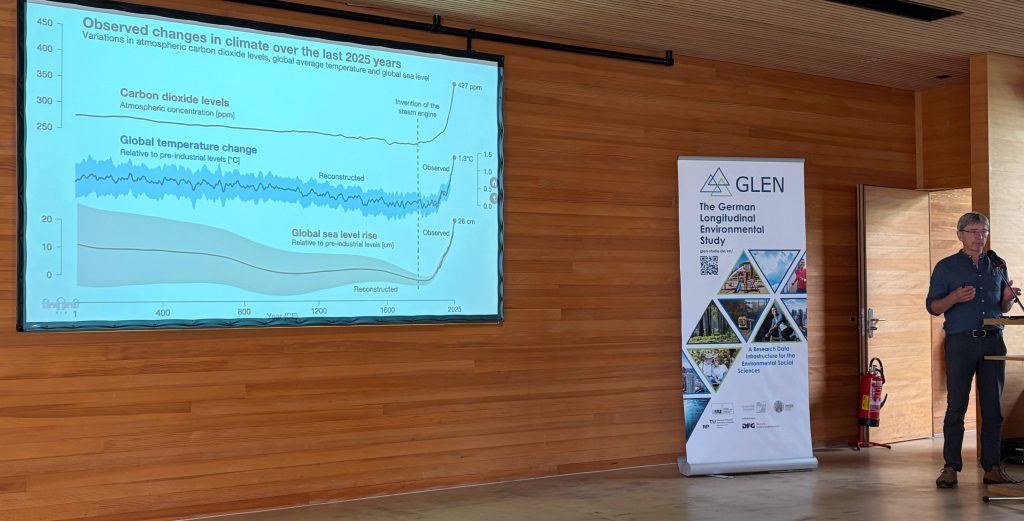
This week, I traveled to Germany to deliver a keynote address at the International Conference on Environment and Society organized by the German Longitudinal Environmental Study (GLEN). The program collects longitudinal data on environmental attitudes and behaviors in Germany, which are now publicly available (I encourage anyone who is interested in doing related and/or comparative research to check out their amazing resources).
The other keynote speaker at the conference was Co-Head of the Research Department on Earth System Analysis of the Potsdam Institute for Climate Impact Research, Stefan Rahmsdorf. During his speech, Rahmsdorf shared an update on the current state-of-the-science of climate change. The outlook is grim: temperatures are increasing as concentrations of greenhouse gases in the atmosphere continue to rise. Rahmsdorf noted that the window to keep temperatures below 1.5 degrees of global warming has closed and it is extremely likely that we will surpass surpass an average global temperature increase of 1.5 degrees Celsius by 2030. Rahmsdorf reminded us that we will see average temperature peaks above this threshold during periods of El Niño. (While I was in Germany, the super El Niño was confirmed and I got to experience the beginning of what is expected to be a record-breaking heat wave in Europe).
During the discussion, Rahmsdorf responded to a question about why he persists: “even though we have surpassed 1.5 degrees of warming, we can’t give up.” His message of perseverance and his belief that the science can help limit the worsening effects of the climate crisis were a welcomed reminder that climate scientists are apocalyptic optimists too.

