
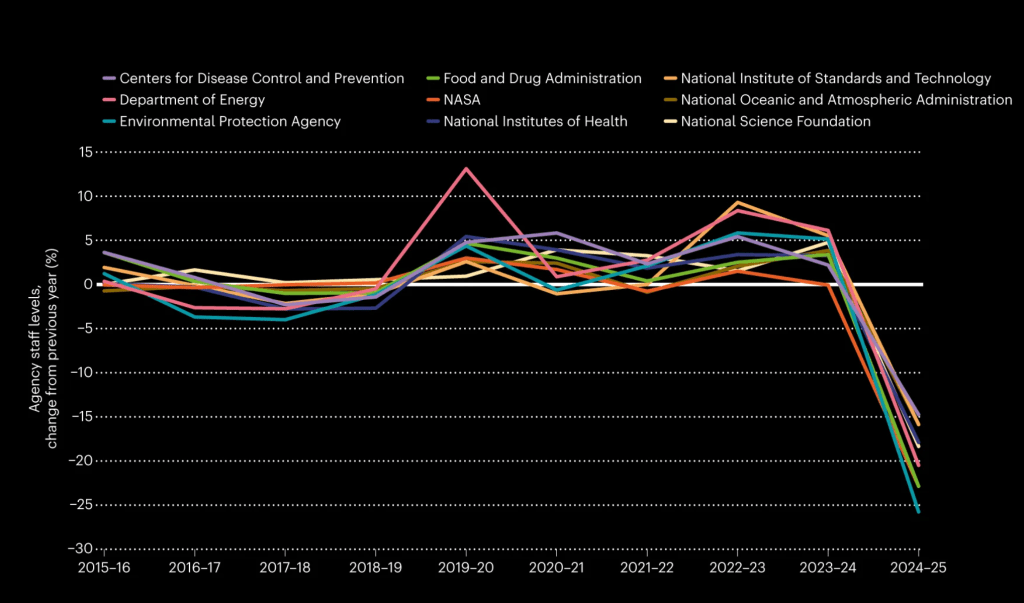
source: Nature 2026
Ever since IPCC chair Bob Watson informed me that “science was necessary but not sufficient” and “only one small input” in the polcymaking process over a meal at the UNFCCC Subsidiary Body for Scientific and Technological Advice (SBSTA) meetings in 2001, I’ve been trying to understand the role that science plays in climate politics (for the full exchange, see NGCCR, page: 147).
To that end, I have spent a good deal of my time over the past 25 years studying how perspectives on climate science inform policymaking. This research has documented the ways that climate information is cherry picked and amplified through echo chambers to political ends and how misinformation diffuses among political elites working on the issue of climate change (see the Climate Constituencies Project site for links to all publications).
Since the Trump Administration took office in January 2025, we have seen an extreme shift in science policy in the US. The Partnership for Public Science reports that the federal government has lost about 118,000 federal employees working in scientific fields.
I had the pleasure of sitting down with Naomi Oreskes to talk climate disinformation, how to understand the current attacks on science, and what comes next in the most recent episode of the Apocalyptic Optimist Podcast. In the conversation, Professor Oreskes draws on her extensive scholarship around science and misinformation to connect the dots about what’s going on in the United States. She notes that what we’re seeing today is not just an exaggerated version of the typical partisan swings in US politics. Instead, she explains how the Administration’s treatment of science and scientists follows a similar pattern to what has been documented in other countries when they were taking an authoritarian turn.
You can watch the whole conversation below (or tune in wherever you pod):

