Introducing the COPOut Podcast

This weekend, I am launching the COPOut Podcast for apocalyptically optimistic climate conversations. During each episode, I will host a panel of guest experts who will share their unique perspectives on the state of climate action, the path towards more effective climate solutions, and the role that the international regime—including the annual UN sponsored Conferences of the Parties (COPs)—can and should play in getting us where we need to go.  The first episode goes live on Sunday November 9th, 2025 at 3pm. You can watch the episode at the Center for Environment, Community, & Equity, access it via our YouTube…

NoKings 2.0 Brings Joyful Resistance Across the US

On October 18th, a coalition of left-leaning political groups coordinated a second national day-of-action to declare that the US has No Kings.  Almost 3,000 events took place across the US during this second NoKings Day, with early estimates predicting that over 5 million people had joined the day of action in the US (with many more participating outside the country). My team was back out in the streets of Washington, DC surveying the crowd of about 200,000 people to understand who turned out, what motivated them to participate, and how turnout compared to previous protests during the current Trump Administration.…

Building Community to Push Back Against Autocracy

Yesterday, I got the opportunity to speak at the AU Walkout. It was exhilarating to join hundreds of students marching together on campus as part of the #FreeDC movement. I spent my five minutes stressing the ways that turning out en masse (as the students had) is a great way to show solidarity and build a community that has power. We are more than the sum of our parts and it was so heartening to see the peaceful protest right on my campus (and even run into our Provost at the event)! The path ahead will not be easy, but…

What We Learned Studying the #NoKings Day Across the US

One of the challenges of studying protest in this era of distributed activism is that it’s extremely difficult to get a decent sample of who is participating across sites. When my team surveys at a large-scale protest event, like the Women’s March in Washington, DC in January 2017, we are only able to generalize our findings to the specific location where we sampled participants. In an effort to get a sense of the #NoKings Day-of-Action across the US, we worked with the organizers of the event to survey hosts coordinating these distributed actions. We then asked the hosts who participated…

The Resistance Rises to Declare #NoKings

On June 14th, while Donald Trump held a military parade in our nation’s Capitol, millions of people across the US mobilized to protest the actions of the Trump Administration and its policies during the No Kings Day-of-Action. My team surveyed participants at the flagship event in Philadelphia and hosts organizing events across the US. Here’s a map of the events across the US (left) and the hosts who participated in the study (right), which represent over 10% of all hosts for the events: Top motivations for participation for hosts of NoKings events (over 70%) was:  Trump and Immigration. For participants…

What We Lose When America Loses AmeriCorps

Last Friday, the Trump Administration / DOGE cut about 41% of the grant funding for our national service agency, AmeriCorps, which affected an estimated 1,031 organizations, and 32,465 AmeriCorps members and senior volunteers. The cuts affect programs in every state in the US. The map above shows the programs cut and where they were geographically located. These cuts come just a week after the Administration put most of the AmeriCorps staff on administrative leave. That same Friday, I published a piece in Rolling Stone about the broader implications of dismantling AmeriCorps (the agency responsible for supporting our national and civic…

Resistance 2.0 Rises at the #HandsOff Rallies

This weekend, a coalition of left-leaning groups lead by Indivisible, 50501, and the Women’s March coordinated the HandsOff2025 day of action that included over 1000 events in all 50 states. One of the lead organizers reported over 5 million people participating across the US. We fielded a team of 8 to collect a random sample of participants at the rally in Washington, DC on April 5th and survey them. The findings provide some interesting insights into who is participating in Resistance2.0, what is motivating them, and what we can expect moving forward. Participants traveled from around the US to join…

The Rising Acceptance of Political Violence Among Left-Leaning Americans Grows

Last week, I published a paper at Scientific American that summarized some of the findings from our research at the Stand Up for Science Day of Action on March 7th. One of the most notable and chilling findings was that support for political violence continues to grow among Left-leaning Americans who are participating in protests in the US. Here’s the figure from the article: A mass mobilization has been called for April 5th, with a broad range of organizations–including Indivisible, Women’s March, and 50501–calling for their members to join. Stand Up for Science has also recently called for their network…

Learning About the Growing Threat of Political Violence from the People’s March

Today, I published a piece at the Brookings Institution summarizing some of the findings from our research at the 2025 People’s March in Washington, DC, which took place the Saturday before the Inauguration of Donald Trump. The piece highlights how participants at the People’s March were very similar to those participants at the first Women’s March in 2017: they were predominantly female, highly educated, and White. In addition to the usual questions that I’ve asked participants at numerous protests since the first Women’s March, we also asked everyone about their perspectives on political violence. The results are chilling: in contrast…

Will the Resistance Rise Again?

That’s the question that journalists have been asking me since November 5th. We are about to enter the weekend before the inauguration and young people have been causing trouble from Los Angeles to Washington, DC (while the wildfires continue to burn). This weekend, the People’s March will coordinate over 200 marches across the US on Saturday the 18th (two days before the inauguration). source: peoplesmarch.com (Accessed 1/16/2025) Here in DC, organizers are expecting between 50-75K participants. This number is much less than the first Women’s March in 2017 where we had 500K people marching in the streets of DC the…

Lessons from the Civil Rights Movement

On January 6th, I published “Why climate activists are becoming more radicalized (and why that’s not a bad thing)” (co-authored with Hajar Yazdiha) in The Hill. The piece discusses the ways that climate activism has become increasingly confrontational over the past few years and compares these tactics and the political repression climate activists has faced to the Civil Rights Movement. We conclude: ” Leveraging moments of violence and state repression are opportunities rather than threats to the movement. Mass social change requires persistence in a long game. It requires risks. It requires being willing to give something up. When Tim…

TED Talk on Saving Ourselves

My TED Talk on Saving Ourselves is Live! Tune in to learn why we ALL need to be apocalyptic optimists: Prepared for the climate shocks that are coming and ready to rally as activists, disruptors, and bridge-builders to save ourselves from the climate crisis. As COP29 continues to show the weaknesses of the climate regime and the world braces for a second Trump Administration, the message of apocalyptic optimism is even more relevant. The talk is based on Saving Ourselves, so give it a watch when you can. Go to the link above at TED or here it is on…

Waking Up In Trump’s America 2.0

On the day after the 2016 election, I published a reflection at HuffPost. “Waking Up In Trump’s America And Watching The Ocean Rise” looked at the climate consequences of what candidate Trump had promised. Since I’m still processing the outcome from last night (Trump was just announced as the 47th President of the US 7 minutes ago), I’m going to paste the piece here. As I reread the piece, it’s amazing to see how well it still fits today in 2024 before the sun rises on what will almost definitely be Trump’s America once again. “Waking up on the morning…

Cultivating Resilience through Climate Corps

The last chapter of Saving Ourselves presents three recommendations for how we should focus our collective efforts to get us to the other side of the climate crisis most effectively (check it the book if you’re interested in learning more). The last recommendation is to cultivate resilience: “Because mitigation efforts have so far failed to stop the climatecrisis, we must all be prepared for what is coming.53 Saving ourselvesrequires that we adapt socially and environmentally to aworld of more frequent and more severe climate shocks. Everyone,not just activists, should be prepared for what is coming so we can create resilience…

Thinking More about Protest and Repression

Last night, we got to observe textbook examples of the ways that peaceful protest (including civil disobedience) can escalate into so much more. In NYC, we saw classic case of police repression, with images of NYPD in riot gear storming the Hamilton Building on Columbia’s campus, as well as the encampment on CUNY’s campus. On UCLA’s campus, we saw counter-protesters attack peaceful protesters at the encampment there. While there’s a ton to unpack that is specific to each university and each occupation, these campuses are providing classic examples of how peaceful protest turns violent (and has historically). For anyone who…

Highlights from the CA leg of the book tour

I’m just back from the California leg of the Saving Ourselves Book Tour, which was amazing. Highlights included talking at BookSoup on the Sunset Strip, the conversation with Isaias Hernandez at Occidental College (and the wine and conversation with friends and activists afterwards), the surprise guests to my talk at the Commonwealth Club in San Francisco, and recording of the Factually! Podcast with Adam Conover. Stay tuned to links from this conversation and others I recorded during the trip. Thanks also to all of the other people who took time to talk with me about the book and how to…

3 Myths about Climate Activists

I just published a piece in The Conversation that builds on the findings from Saving Ourselves to talk about 3 common myths about the climate movement and climate activism. This piece is particularly important as Earth Month gets underway and activists take to the streets, boardrooms, car shows and much more to raise awareness about the climate crisis. The 3 myths are: Myth 1: Climate activists are just young people Myth 2: Climate activists mostly do things like throw soup and disrupt events Myth 3: Confrontational climate activism doesn’t work Check out the piece itself to learn more!

Highlights from the start of the Saving Ourselves Book Tour.

In the first few weeks since the book came out, I’ve had the privilege of speaking with an amazing group of people at universities and institutions, as well as with a number of climate groups that are working in the climate movement. Clockwise from top Left with: Almeta Cooper at the Library of Congress, Dharna Noor at the Library of Congress, XRNYC in NYC, Amaney Jamal at Princeton University, Mustafa Santaigo Ali at Politics & Prose, Kimberly Nicholas and Seth Borenstein at American University, Jean Su at Kramer Books, Steven Donziger, Saad Amer, and Sage Lenier at NYC Ethical Cultural…

Saving Ourselves is HERE!

Just in time for the formal release of the book today, Saving Ourselves was discussed, along with two other environment books in The Financial Times on 2/12/2024. Check out the full piece to learn more about how the book “Offers useful insights into the increasingly disruptive climate campaigns spreading around the world. . . . A handbook for activists in a world facing more ‘climate shocks’, such as heatwaves, floods and wildfires.” Also check out this conversation with the inimitable Amy Westervelt at Drilled and this excerpt from the book that just went up at Brookings. The official book tour…

Saving Ourselves is going on Tour

With the Saving Ourselves release date just around the corner, I am posting the current book tour schedule (with updates and new dates). I’m very excited to join these amazing scholars, journalists, and activists to talk about the book, its findings, and its implications!! For details on specific events, tickets, and registration, see my events page. If you’re in any of these locations, join us! If you’re not, there are also some virtual events and the event at the Library of Congress on February 28th will be live streamed and then available online. A note about my travel just fyi: I try to use…

Happy 2024: Here Comes Saving Ourselves!

As climate scientists debate the exact amount that Earth has warmed to date and 2023 has officially been documented as the warmest year ever recorded, Saving Ourselves is about to arrive. I received my personal copy from Columbia University Press on New Year’s Eve (see the official unwrapping here). For anyone who preordered books, your copy should be on its way to you shortly. For anyone who hasn’t yet ordered a copy of the book, details (and discount codes) are here.   Stay tuned for information about book events that are being finalized and new findings. In the meantime, here’s a playlist inspired by…

Talking About Climate Protest in Nature

Today, a piece that I wrote with Oscar Berglund and Colin Davis went live at Nature. In it, we look at the current state of the research on climate and other activism to understand how a movement best effects change and converts citizens’ concerns into policies that address the problem. To answer that question, we focus on three key questions that need to be answered: what motivates some people to join protests while others do not? What are the pros and cons of the tactics that protesters use? And what can researchers do to understand and counter the increasingly repressive…

Saving Ourselves Has An Index (and is completely done)

It’s funny how you toil for years writing a book. While you’re in it, it feels like it takes forever collecting the data, analyzing the data, doing follow-up interviews, writing up the argument, and editing the document into the final book. But then, like that, it’s done. This week, I submitted the final index to Columbia University Press and Saving Ourselves will be out soon (already, galleys are circulating). Here is a word cloud of the index of the book. I realize that it’s an imperfect way of showing the contents, but it does provide some sense of what you’ll…

Saving Ourselves is Available to Preorder

Saving Ourselves: from Climate Shocks to Climate Action is now available for preorder! Some preorder options: -Amazon -Barnes and Noble -Indiebound (for local independent bookstores) -Politics & Prose (DC-based bookstore where I’ll be doing an event in with Mustafa Ali on 3/8/24) When it becomes available for preorder at Columbia University Press, I will share the publisher’s link and their discount code. Early reviews have come in from Bill McKibben, Jeff Goodell, Charlie Gardner, and Naomi Oreskes (and are available here). I have also started to schedule book-related events and will post about them soon. Until then, you can view…

Learning from the March to End Fossil Fuels

On September 17th, an estimated 75,000 people took to the streets of Manhattan to demand that President Biden ‘end fossil fuels’ by “stopping oil and gas projects, phasing down drilling, and declaring a climate emergency.” The event was the largest climate mobilization in the US since President Biden took office and since before the pandemic began. My research team and I surveyed participants at the march to learn about who they were, what motivated them to participate, and their perspectives on the growing climate movement. Of the people whom we randomly sampled, 170 people completed the survey (representing an 80%…

Climate Activism Takes Center Stage in the Lead Up to the Climate Ambition Summit

As we approach Climate Week and the Climate Ambition Summit, there has been climate activism has become much more common. Last week, climate activists worked to raise awareness of the climate crisis through numerous non-violent acts of civil disobedience. Particularly memorable actions took place on Thursday (the 7th) when three activists delayed a game at the US Open in NYC with one activist gluing his bare feet to the stands, and on Friday (the 8th) when activists disrupted a concert in Lucerne by gluing their hands to the podium of Conductor Vladimir Jurowski. In addition to these more performative micro-protests,…

Studying the Growing Radical Flank as the World Burns

This summer, climate records have been broken again-and-again. At the same time, a small but growing part of the climate movement has been participating in more confrontational activism. I talk all about this growing “Radical Flank” (a social science term, not mine), how it fits in the movement and what we can expect as the world warms in Saving Ourselves. Since the book is not yet out though, I published this piece at Brookings (with Quinn Renaghan), which introduces this flank of the climate movement and provides data collected from activists affiliated with groups involved in the action at the…

Saving Ourselves is In Press

I submitted the final Saving Ourselves manuscript to Columbia University Press last week! The book builds on the argument presented in my paper “AnthroShift in a Warming World,” which was published in Climate Action in summer 2022, to understand what it will take to get to sufficient climate action that will keep us within the framework codified by the Paris Agreement. Saving Ourselves integrates various data on climate policymaking that I’ve collected over the past 25 years with data that I collected specifically for this project through open-ended semi-structured interviews, observations, and surveys with climate activists to understand what is…

Hitting the Streets for EarthDay 2023 (to collect data)

I’m heading back out into the streets to survey protesters this weekend at the 2023 Earth Day Actions planned in Washington, DC. In contrast to previous Earth Day celebrations, that focused exclusively on nondisruptive events and concerts, a number of groups have announced their intentions to include disruption/civil disobedience in the actions this year. My research team and I will attend the rally and the march and will aim to survey a random sample of activists participating throughout (following the same methodology that I have used in my previous research and written about here). Given the plans for civil disobedience,…

Saving Ourselves is Submitted!

A complete draft of my new book, Saving Ourselves: from Climate Shocks to Climate Action, has been submitted to Columbia University Press! There’s still some editing to be done (and updating), but this outline is what I expect we’ll see in the final manuscript when it’s published as a book in the not-too-distant future:

Enter the Disruptors:  Calling BS and Mobilizing the Masses

That’s the title of Chapter 4 of my new book, Saving Ourselves: from Climate Shocks to Climate Action, which I’m hoping will be in press at Columbia University Press by early 2023. The book synthesizes my research on climate policymaking and activism over the past 20+ years to look at where we are going and how we save ourselves (for an overview of the conceptual framework for the book, see my paper on AnthroShift in a Warming World published in Climate Action this summer) The book begins with the increasingly depressing news about the climate and the effect humans have…

Teaching How to Study #Resistance

Much of the content on this site has focused on understanding the Resistance: where it came from, who was involved, why they were involved, and what it means to political life in America today. My writing is informed by my independent research on activists and at protests in the US, along with my personal interpretation of historical perspectives on Resistance. Beyond the American Resistance book, I have written numerous articles about the activism I observed, including this collaborative paper on the science of protest. I am also a teacher. This semester, my undergraduate honors course teaches how to study environmental…

What Can We Learn from the Protests Against Systemic Racism in Summer 2020?

I just posted a piece at FixGov at the Brookings Institution that summarizes my recent piece with Stella Rouse, “Intersectionality within the racial justice movement in the summer of 2020,” which was published in the Proceedings of the National Academy of Sciences. The article analyzes data collected from participants in the protests after George Floyd was murdered to understand why protests were diverse. It concludes that collective efforts, coupled with identity-based motivations, and the moral shock of witnessing the murder of an unarmed Black man by a police officer over social media provided a dynamic catalyst for participation across race,…

Stop Clapping for Tinkerbell: The Left Needs to Be OK with Getting its Hands Dirty

Yesterday, Vanessa Williamson and I published a piece in the Nation about the asymmetries in the tactics on the Left vs the Right. We point out that many progressive organizations follow “an outdated playbook of one-day rallies and electoral politics that currently can achieve no more than a pro forma vote on doomed federal legislation.” On the morning of the second March for Our Lives, it’s worth thinking about how this is playing out across a range of progressive issues today. Calling for a peaceful march and some lobbying days to try to get Congress to pass a bill (that…

Welcome to the Graveyard of the Progressive Movement

5 years ago this weekend, millions joined the Women’s March in the largest single day-demonstration in US history. This weekend, however, there is no Women’s March scheduled. Instead, we will only see activists marching in DC as part of the Annual March for Life (against abortion rights). Last January, I spoke with Danielle Kurtzleben on NPR about what will come of the Resistance in the wake of the 2020 election and how progressive groups need to pivot from defense to offense to support the progressive agenda. There’s historic precedent that, when Democrats win, movements die. A year in, it’s clear…

Does the Rittenhouse Verdict Change the Lessons of the American Resistance?

The outcome of the Kyle Rittenhouse case provides an important moment for reflection about the role of protest in American democracy and the risk protesters face when they participate in activism. While protests on the Left have remained predominantly peaceful over the past five years, the dangers to protesters have spread silently.  I wrote about the implications of the Rittenhouse case on protest in America and what are the lessons from the Rittenhouse verdict to the hundreds of thousands of Americans who jointed the Resistance for Slate (which, of course, came out the afternoon before Thanksgiving). My piece focuses on…

More Climate Resistance Around the World

Today is a Global Day of Action for Climate Justice. It follows yesterday’s huge climate march that was coordinated by youth involved in Fridays for Future and featured a speech by Greta Thunberg. I wrote this piece to explain how the climate movement has grown (and why we should expect to see much more activism at this round of climate negotiations than we have seen before). Not only should we expect more activism, protest, and resistance at international meetings, but this growing movement will certainly also target their activism within countries–including the US. As I note at the end of…

Before the Women’s March Marches Again

On Saturday October 2nd, the Women’s March will march again. This time, the focus is specifically on defending Reproductive Rights. Although it is not clear how many people will join this mobilization in the streets during a pandemic before the Supreme Court reconvenes, the issue of Reproductive Rights is certainly on the mind of many resisters who have been out in the street starting at the first Women’s March in 2017. In fact, in a 2019 paper, Lorien Jasny and I found that the issue of Reproductive Rights explained who was persisting in the Resistance, marching in the streets again-and-again…

When Protest Becomes Insurgency Revisited

Today, the House of Representatives is holding its first hearing of the January 6th Committee, which includes the testimony of 4 police officers. Listening to the testimony is chilling but provides us with important reminders that there is much to learn about how January 6th happened. Every single testimony provides evidence that the insurrection was premeditated and coordinated. Important questions that need to be answered include: what groups were involved, how were they coordinated, how did they communicate with and mobilize participants, as well as how were the people involved connected to people in positions of power. I hope that…

Networks of Engagement Around the 2020 Election

As part of the Indivisble Census, members of the Indivisible network were asked to indicate how they worked with the Democratic Party, Individual Candidate’s Campaigns, and other groups during the 2020 election. About half reported working with each. Respondents wrote in about 2,000 groups that they had worked with around the 2020 elections.   Five groups were each named by more than 200 respondents individually: Vote Forward, MoveOn, Swing Left, Fair Fight, and ACLU.  It’s worth noting that there was quite a bit of overlap with the organizations mentioned in 2020; 12 of the top 15 groups were in the top-15…

On the Anniversary of the Murder of George Floyd: More Evidence that White Allies Are Continuing to Push For Racial Justice

On the 1 year anniversary of the murder of George Floyd, I am releasing some preliminary findings from the 2021 Indivisible Census. As I’ve written elsewhere and documented with data collected from participants at BLM protests in summer 2020, and with data from the American Resistance dataset, the murder of George Floyd was a turning point for the movement against systemic racism in the US (see also the discussion in a new piece in Politico today). The 2021 Indivisible Census, which closed earlier this month, provides more evidence about the ways that White Allies have joined the call to end…

This is NOT What Democracy Looks Like! State-Level Efforts to Limit Protest are on the Rise

Across the country, while efforts to limit voting have been introduced in most states and gained substantial attention, more than 80 bills have been simultaneously been introduced in 34 states that aim to reduce citizen’s right to assemble and protest.  These attacks on the very foundation of democratic participation—voting and peaceful assembly—are the most recent example of a coordinated effort by the Right to target policies at the state-level while all eyes are on a new Democratic President and his high-profile efforts to implement progressive change at the federal level. My new piece discussing what these bills mean and how…

The 2021 Indivisible Census is Open!

Last night, the 2021 Indivisible Census opened. The Census is collecting data on the Indivisible Network to see how this Resistance group has grown over the past year. It will provide insights into the priorities of the network in terms of who is participating, what they are doing, and what is motivating them. Here’s a map of respondents from the 2020 Census (14,144 members of the network participated). Hopefully we’ll get a similar response this year or even more!

Will the Resistance Join the Graveyard of Democratic Politics (take 2)?

I posted a piece with this name right after the midterm elections in November 2018 and, after it came up in a conversation with Danielle Kurtzleben on NPR about the future of the Resistance, it seems like a good time to revisit it. With yesterday’s inauguration of Joe Biden as the 46th President of the United States, the 2020 election is finally behind us. As executive orders are signed to replace some of the most unpopular of Trump’s policies, we need to ask ourselves (again): Will the Resistance join the Graveyard of democratic politics? History suggests that progressive political movements…

When Protest Becomes Insurgency

Since violent insurgents stormed the US Capitol on January 6th, myriad accounts of what happened have been reported. It is clear that what many believed would be a peaceful protest that was legally permitted by the National Park Service, turned into something altogether different. In contrast to some claims that the actions of January 6th were unexpected (and that is why the Capitol police were so ill-prepared), expectations of violence had been reported far and wide prior to the events last Wednesday. For example, here is a detailed report from the day before the event in the Washington Post. The…

Kicking off 2021

It’s going to be a wacky week! Yesterday, the 117th Congress began. On Tuesday, the Georgia Senate runoffs take place, which will determine which party controls the US Senate. On Wednesday, the Congress will meet to count and certify each state’s electoral votes, which is expected to include a number of challenges by Republicans. At the same time, thousands of Trump supporters are expected to travel to DC to protest the outcome of the 2020 election. Numerous permits have been issued for around Washington on Wednesday January 6th for rallies that will demand Congress overturn the results of the 2020…

Are We Drifting Towards Civil War?

Yesterday, I posted a new piece at Business Insider that lays out three reasons why America may be drifting towards a Civil War: first, the President and his allies have coaxed hate out of the dark corners of society where it had been relegated by social norms; second, the Trump Administration has cultivated a culture of untruths and alternative facts; and third; misinformed Americans have been emboldened to challenge the legitimacy of the US government and take up arms in the streets. Although some have responded by saying that I am fear mongering and using the title (which the editors…

As the Electors meet, Protests get much more dangerous

Today, the electors will meet to cast their votes for the 2020 Election. While many people who have been involved in the American Resistance since Donald Trump took office expected to be seeing light at the end of a four-year long tunnel, there is growing evidence that we are entering a dark place where violent conflict fueled by conspiracy theories against our democracy are rampant. I spoke to Annie Gowan at the Washington Post on Friday about how we got here for her piece on public officials being targeted by activists: “What we’re seeing is an escalation, so that instead…

Resisters in the 2020 Election

This week has been a rollercoaster as the 2020 election continues. Although a national day of action to send a message to #ProtectTheResults had been called for Wednesday, the organizers called off the mobilization while states continued to count their mail-in ballots. Instead, only a small number of protests took place in urban areas, with relatively small “rolling protests” in the nation’s capital. On Tuesday, I published a piece that summarized findings from a follow-up survey with Resisters (those whom I originally surveyed in the streets protesting the Trump Administration and its policies starting after the inauguration in January 2017…

The Women’s March Marches Again

Yesterday, the Women’s March coordinated events in over 425 locations across the United States. I was out in Washington, DC with a research team of 10 (here’s the photo before we began data collection). We also collected data in NYC and LA (stay tuned for those findings). Although the event turned out repeat protesters (only 15% reported being new to protest), about three-quarters of participants reported previous experience protesting systemic racism (76%), with almost half (46%) reporting participating in previous Women’s Marches. Demographically, the turnout was consistent with other Women’s Marches and the other big protests in the Resistance: the…

Door-Knocking in Election 2020

Yesterday, Lara Putnam and I published a piece in the American Prospect called “Door-Knocking in a Life-or-Death campaign.” The piece compares the very different ground games being run by the Trump and Biden campaigns during the pandemic. Although rumors were flying yesterday afternoon that the Biden campaign was going to begin canvassing as part of the final month’s GOTV plans, with today’s announcement that the Trumps have COVID, it’s unclear how the campaigns will move forward. Whatever the campaign decides, it’s worth highlighting that our collective research over many years has found that face-to-face campaigning is much more effective when…

Bracing for More Resistance

As America wakes up to the news that Justice Ruth Bader Ginsburg has died, many political groups and Republican Senators have already started pushing forward with their political agenda. Plans are underway to respond with resistance in the streets. Here is the most recent Resistance Timeline since the 2018 midterm elections (which feel like a lifetime ago). I expect to be adding more to the timeline in the coming weeks. Stay tuned.

What we learned from the #MarchOnWashington2020: very little violence and broader priorities.

Since George Floyd was murdered in late May by a police officer in Minneapolis, media attention has focused on the demands of protesters across the country who want to abolish and/or defund the police.  By listening to the activists who are yelling the loudest, the main message of the protesters who have turned out to protest peacefully is being lost:  the highest priority for participants in the movement is not about the police at all; it’s about race-based health disparities and race-based poverty.  For the past three months, activists have flooded city streets across the US to protest racism and…

Thus begins a long week of Resistance

On Saturday, the #SavetheUSPS day of action mobilized thousands of people to participate in more than 800 events outside local post offices around the US.  The event was coordinated by a broad coalition of progressive groups including MoveOn, NAACP, SEIU, Working Families, Indivisible, and the American Federation of Teachers.  It provides a great example of how distributed organizing continues to be used on the Left to mobilize activism (for more on this issue read my recent piece in Business Insider). With this coordinated action taking place on Saturday, protests planned to coincide with President Trump’s acceptance speech for the Republican nomination from the…

Continuing to Study Protest through the Pandemic

Even though the COVID-19 pandemic originally motivated many groups to shift their activism online, the killing  of unarmed George Floyd by police in May motivated extensive and sustained protest across the US.   As these protests grew and the Trump Administration deployed forces in many cities, it become increasingly clear to me that this wave of confrontational protest is part the story of resistance to the Trump Administration and its policies (see here is a for a full definition of what is the Resistance). As protests spread across the US in response to the murder of George Floyd in May, I…

How Violence at Protests Escalates

Last night, the Mayor of Portland joined the protesters in the streets of the city and was teargassed by “federal law enforcement” deployed by the President.  Here’s a great thread by Washington Post reporter Marissa Lang with video of the night and here’s another thread that puts last night in perspective by Sergio Olmos who has been out every night documenting the protests. As the videos clearly show, the crowds in the streets are diverse, including a “wall of moms” and dads with leafblowers who have been trying to clear the air of teargas.  Moreover, there’s no evidence that these…

Updated Resistance Timeline

Over the past four years, I’ve posted Resistance Timelines a few times to this site (and a truncated one is included in the book).  If you’re interested in how I define Resistance, see this post. As the protests that erupted after George Floyd was murdered continue in many cities, Putnam, Pressman and Chenoweth have reported in the Washington Post that “It is the largest sustained mobilization in the United States in our lifetimes.”  Here is a timeline that starts with the mid-term elections in 2018 and includes these recent protests.  With a National Strike for Black Lives called for July…

The Diversity of the Protests is a Good Sign for Racial Equity

Today I posted a new piece on the How We Rise blog  at the Brookings Institution.   The piece discusses the implications of the racial and ethnic diversity of protesters on the 2020 Election. It highlights that, not only are activists supporting Joe Biden who is more likely to support policies that promote racial equity, but that the 2020 election is on track to elect more progressive candidates of color.  By supporting representation along with policies that promote racial equity, the upcoming election could make some serious progress.

Patterns Across Protests Sparked by the Killing of George Floyd

It’s been a month since protests began after the killing of unarmed George Floyd in Minnesota.  Working with teams of researchers, I have collected data on three different days at the protests in Washington, DC:  during the District Die-In on 6/4, over the weekend on 6/6, and during Juneteenth on 6/19. There are some clear patterns that have emerged across these three waves of data collection regarding the politics of the crowd, their motivations, and demographics.  These findings are consistent with a recent profile of protest participants reported by Pew Research. Politics. Participants continue to report very high levels of…

The Demographics of the Current Protests

Since protest erupted across the country after the killing of George Floyd, I’ve been working to collect data on the protest participants.  Over the weekend of 6-7 June, I worked with teams to collect data from the protesters in Washington, DC, New York City, Los Angeles, and London. We were testing out the viability of a methodology that we proposed in a recent paper in on studying protests in Science Advances.  To facilitate coordinated data collection and quick analysis, we collected data with cellphones and QR Codes.  Many have asked about the diversity of the crowds.  As pieces in the…

The American Resistance Joins the Protests Against the Killing of George Floyd

As of early Saturday morning, protests have broken out in cities across the US  in response to police brutality, calling for racial justice in America.  I haven’t seen an accurate count yet, but I expect that the crowd counting consortium will have data for anyone who is looking for numbers. Three days ago, I wrote a post that asked if the American Resistance would join these protests that were motivated by the killing of an unarmed black man in Minneapolis.  Three days later, the answer is a resounding YES.  Resistance Groups have posted statements in solidarity with the protesters, including Indivisible,…

Will the American Resistance Join the Protests Against the Killing of George Floyd?

We know that the American Resistance is comprised predominantly of highly educated middle aged White women.  We also know that many of them are motivated to participate in activism by issues related to Racial Justice and Police Brutality.  So, the question is whether they will join the protests in the streets in response to the killing of George Floyd by police yesterday in Minneapolis?  Will the Resistance Groups that serve as the connective tissue of these activists mobilize their members?   For more details on the protests right now, see this thread.

The Geography of the Resistance Now

I’ve posted before about the geography of the Resistance in the streets, which was based on the data I collected from people  whom I surveyed while they were protesting in the streets in Washington, DC. Now that the first wave of the Indivisible Census is complete, I am able to map out the geography of the American Resistance today (defined as Indivisibles here–but I am very aware that some resisters are not involved with the Indivisible network).  The first wave of the census took place from 9-26 April during the COVID19 pandemic. Analysis of these data are ongoing, but here…

Winning Elections takes much more than Winning Votes.

Today I published a piece in Politico about the youth climate movement and their important role in the 2020 election.  The piece highlights how, although they were resistant to Joe Biden as a candidate through the early primaries, youth climate activists are not part of the #NeverBiden contingent.  In my recent survey of organizers at Earth Day Live, all but one of the 171 respondents reported that they would vote for Biden. The piece also notes that youth climate groups, which I consider the “connective tissue of democracy,”  have continued to challenge candidate Biden on their core issues.  Without encouragement…

Studying Resistance During COVID-19

Last week, I began data collection for two projects that will help us understand Resistance in the age of COVID-19 (and leading up to the 2020 election).  Although both of these projects were planned well before the pandemic basically shut-down the US, questions were added about how the pandemic has affected individual’s activism and political work. Luckily, both projects involve data collection through online surveys, which means I am still able to do the research while under stay-at-home orders in the state of Maryland: The Indivisible Census. This project tracks the Indivisible movement during the 6-months leading up to the…

And the Nominee is…Biden.

Today, Bernie Sanders dropped out of the race for the 2020 Democratic nomination.  In November, Joe Biden will run against Donald Trump in the general election.  Based on my research in September and conversations across the country more recently, it is pretty clear that Biden has not been a favorite among progressive activists and Resisters. At the same time, COVID-19 continues to spread across the United States and the death rate climbs.  In response to the pandemic, all sorts of Resistance has moved online.  Organizations including Indivisible, Swing Left, and Another ACRONYM have launched digital toolkits and specific campaigns to…

American Resistance in the Age of Covid-19

The American Resistance book tour has been canceled at least until June while the world responds to the threat (and spread) of the Coronavirus.  I’ll be keeping track of events that are canceled and rescheduled here FYI).  As federal, state, and local governments respond to the virus, questions are emerging about how the practice of social distancing will affect the 2020 election. By definition, flattening the curve involves changing the ways that people participate all sorts of group activities, including campaign events and rallies, voter mobilization and contact, in person activism and protest, as well as in person voting, which frequently…

The American Resistance Around the US

In the past two months, I’ve had the chance to talk with Resisters around the US during my book tour.  I’ve been in Colorado, Virginia, Maine, Massachusetts, and Iowa and have had the privilege of speaking with activists who are now thinking about the 2020 Election, including people who were in the process of working on early primaries/caucuses during my visit.  As I discuss in American Resistance, these activists (who tend to be highly-educated, middle aged, white women) are committed to progressive change and progressive candidates in the US. Although no one can predict the outcome of the 2020 election…

The Resistance Enters Primary Season

This week, primary season originally kicked off with the Iowa Caucus. In contrast to the results coming out quickly after the event on Monday night, we are still waiting for the  final results as many discuss the dangers of introducing more technology into our electoral system.  At the same time, the Senate finally voted on the articles of impeachment and acquitted the President of the two charges.  On the evening of the historic vote, hundreds of protests were organized across the US to respond to the acquittal under the banner of Reject the Coverup. There’s no question that we are…

Some Reflections on the Women’s March 2020

Now that the fourth anniversary of the Women’s March is behind us, many (including this recent piece in the Hill) are discussing what the low turnout this past weekend means to the March and to the Resistance more broadly.  So far, the Crowd Counting Consortium reports that less than 150,000 people participated in this most recent event, which is a far cry from the millions who marched in the first Women’s March in 2017 (note that they are still counting). Although the relatively low turnout suggests that an annual day of protest will not consistently turn out a huge crowd,…

Another January of Resistance in the Streets

This past week, we saw lots of resistance in the streets:  people turned out to protest the conflict with Iran at the #NoWarWithIran actions, as well as the final DC-based #FireDrillFriday around climate change, which involved Jane Fonda and her famous friends marching along with well known climate activists and engaging in civic disobedience. Next weekend is the fourth anniversary of the historic Women’s March, which was the “spark that ignited the Resistance” (American Resistance, page 56).  Although demonstrations are scheduled across the US, turnout is expected to be much smaller. I provide some explanation why in the Washington Post…

American Resistance Enters 2020

Happy New Year!  The American Resistance book tour resumes this month. I will be at Profs and Pints in Washington, DC this Sunday (1/5);  talking with Ian Silverii  at the Tattered Cover in Denver on 1/15; at the University of Colorado, Boulder and at the Boulder Bookstore on 1/16;  and talking with Matt Rogers at Busboys and Poets in Arlington, VA on 1/22.  Check out Events for more information.

What a Week for American Resistance!

This week, President Trump was impeached in the House of Representatives and more than 100,000 people around the US came out to participate in the #NobodyIsAboveTheLaw demonstrations (the Crowd Counting Consortium is still counting). As Americans mobilized to protest the President and express their support for the impeachment process, many were asking about what is the purpose of protest in American politics right now.  Last Friday, I wrote a piece for TIME that discusses protest in the US right now.  In particular, I explain how Resistance Groups are employing protest as a tactic to mobilize energy for efforts in the…

The Resistance Marches Again

On Tuesday, December 17th, the Nobody Is Above the Law coalition coordinated over 600 protests across the US.  On Wednesday, December 18th there will be a rally that will take place at the US Capitol.  I talk about what we should expect from these demonstrations in my recent piece in TIME: “A controlled burn that is not likely to spill over into real disruption and potentially violent resistance. Organizers apply for permits and pay for legally required bathrooms while participants assemble with witty signs and follow approved routes. ” In his new piece in The Nation, Jeet Heer discusses the findings…

First Reviews of American Resistance

The first reviews of the book came out over the holiday weekend.  In Joseph O’Neill’s “No More Nice Dems,” he discusses American Resistance along with Meaghan Winter’s All Politics is Local in the holiday issue of New York Review of Books.  Noah Berlatsky writes “Trump’s lies and cruelty fueled a real resistance. That’s hopeful news for progressivism” for a piece on NBC Think.  More reviews are in progress–I’ll share when they are available. In the meantime, protesters once again shut down Washington, DC today, as the climate resistance gets more confrontational.

American Resistance’s First Week

It’s been a busy first week filled with numerous events in New York City and Washington, DC.  I also did an interview with Jesse Singal for ArcDigital (many thanks to them for the cool image I’m sporting above and on twitter!), the Breakthrough barriers with Damali podcast, and the @NewBooksPoliSci podcast with Heath Brown. I’m currently on my way back up to NYC for events at the Astoria Bookstore  with Vanessa Wruble from March On TONIGHT, and at Civic Hall with Joan Walsh and Micah Sifry TOMORROW, so come if you can! If you’re in DC, I’ll be at Politics and Prose with…

American Resistance Builds Momentum

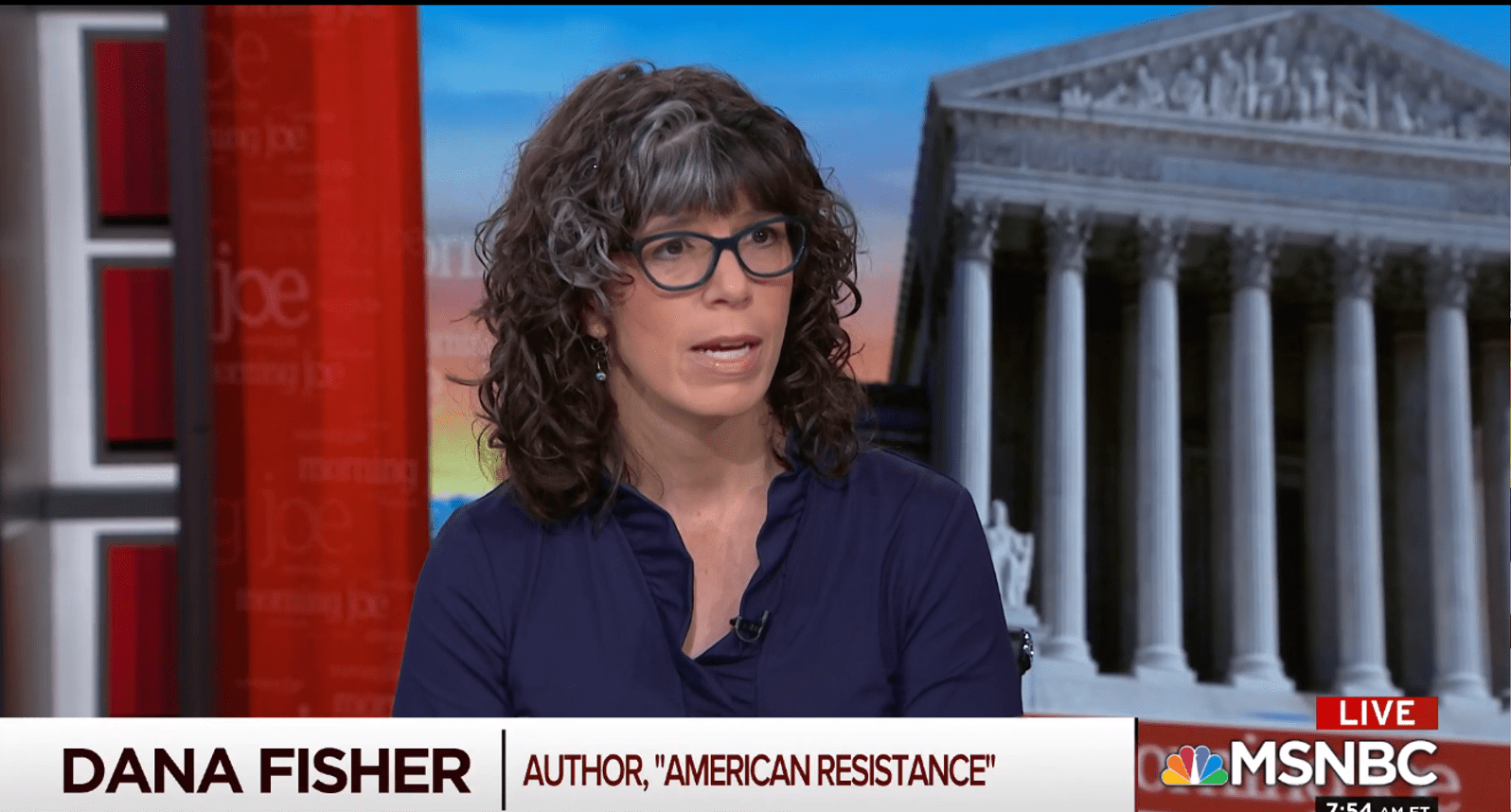
American Resistance is officially out on Tuesday (that’s election day in a number of states)!  Events to promote the book began in New York City this week with a publisher’s salon and a chat about the book on Morning Joe on November 1st. Stay tuned for much more.  Also, if you’re in the mid-Atlantic region, check out the list of the many book events scheduled in New York, Washington, DC and Philadelphia in the next 5 weeks (including a joint event with Leah Greenberg and Ezra Levin from Indivisible to discuss our new books at Swarthmore College on December 2nd)! …
First Images of American Resistance

American Resistance is officially out in 2 weeks!  Today Michelle Goldberg wrote about the book in her column in the New York Times.   Even though the book is not out yet, many people have taken advantage of pre-orders (and the discount).  It’s so great to watch the book making its way around the world (so far, only Europe)–please keep sharing your images!!

The Power of Social Movements and Civic Activism

I’m just back from a series of talks that included meeting with civic leaders from the Western Hemisphere to discuss civic activism and its role within the democratic process.   I presented my recent work on the youth climate movement and how it connects with the Resistance.  One of the participants in the group–Raul Olivan Cortes–from the Government of Aragón in Spain created this diagram of my talk.  Many of the main themes of American Resistance are right there (along with a beautiful portrait of me and a representation of the cover of the book).  Thanks to Raul for allowing me…

Looking Back at a Week of Climate Resistance

Early estimations report that over 7 million people participated in what Greta Thunberg and others are calling the #WeekforFuture, which included Climate Strikes and direct action around the world.  Here in the US, I worked with the organizers of the Strike to survey the hosts of 633 of the events as well as collecting data in the crowd in Washington, DC on September 20th. As I wrote in a piece in July 2019 based on earlier data, the youth climate movement in the US is populated by young people who cut their teeth in the American Resistance.  Over half of…

American Resistance Is Arriving

While preorders of advanced copies are being delivered, I’m still working on scheduling events around the US to discuss American Resistance.  Check out the current schedule of events for the next few months.  If you’re in New York, Princeton, Philadelphia, Washington DC, Atlanta, Denver, Boulder, or Toronto, definitely come out!  I’m still booking events so reach out if you’re interested in a place where I haven’t yet scheduled anything. As many people already know, there’s been a terrific amount of climate resistance taking place–with the Global Climate Strike on Friday and today’s #ShutDownDC.  Much more is planned for the rest of…

Watching Youth Climate Resistance Spread

Late last week, Greta Thunberg arrived in the US to participate in the events around Climate Week that will coincide with climate-related meetings at the United Nations on 23-29 September. Before the festivities get underway, a whole week of climate resistance is scheduled, including the #GlobalClimateStrike on 20th September.  The Strike is expected to draw both adult and student participants around the world. Two days after her arrival, Thunberg and her many compatriots held a school strike at the UN on Friday–for the first time striking together in the same place (although many people participated in school strikes around the…

The Calm Before the Storm

Last week, I presented sections of the American Resistance and work related to the project at the annual sociology meetings. Here’s a photo from a video of me talking about posting papers related to the book. I’m enjoying a bit of calm before American Resistance officially comes out on November 5th (remember that you can preorder now for a discount).  Already, numerous events have been scheduled around the book and more are in the works–if you’re interested in booking an event, contact me.  I will be updating the list of appearances here. We are also experiencing the August calm before…

Word Mapping American Resistance

While reviewing the index for American Resistance, I realized that it provides some interesting data for thinking about the Resistance (and the contents of the book).  Here is a word cloud made up of the most common words/phrases in the index.  The size of the word or phrase is based on how many times it is mentioned in the index.  I removed the word “surveys” from the map because it was the most mentioned by far–since most of the data I collected for the book are survey data.

Even More Resistance

Last Friday night, the Lights for Liberty vigils swept across the country.  Now that my colleagues at the Crowd Counting Consortium have estimated turnout (up to 120,080 people at 692 vigils around the US), I thought that I should update my figure of Resistance in the Streets since the 2018 midterm elections.  Here’s the updated diagram: Already, fall is looking like it will be pretty active, with Global Climate Strikes scheduled for the week of September 20th and the National Trans Visibility March scheduled for September 29 and it’s only July…

The Youth Climate Movement is Made up of Children of the #Resistance

Today is the kickoff of the Youth Climate Summit in Miami, which aims to “uplift the citizens of Miami, and train more young people to be effective climate justice advocates.” My new piece in the Monkey Cage at the Washington Post presents data from my recent survey of young climate activists, showing how those participating in the US are children of the Resistance:  they cut their teeth at the US National School Walkout against gun violence, the March for Our Lives, as well as in 3 years of Women’s Marches.

Resistance Since the Midterms

Tomorrow, a coalition of progressive groups are organizing #CloseTheCamps demonstrations to take place outside local Congressional offices around the country.     This event, which was announced on June 28th, is the most recent act of national resistance since the midterm elections in November 2018. This figure shows some of the biggest protests since the midterms.  These protests have turned out participants in coordinated events around the US, in some cases, like the 2019 Women’s March mobilizing hundreds of thousands of people to participate across the country. I’m happy to report that the proofs for American Resistance have been edited and resubmitted to the publisher! …

Resistance Continues Aiming to #StopTheBans

Yesterday, in response to a series of laws passed in states that restricted women’s access to abortion, people took to the streets once again.  A coalition of groups including Reproductive Rights-focused organizations like NARAL and Planned Parenthood and more general political groups like ACLU, Indivisible, Move On and Swing Left worked together on the #StopTheBans  day of action.  Over 400 events were held around the US (a great collection of images is here). In DC, the area in front of the Supreme Court that was allocated for the protest overflowed onto the street with people joining the demonstration.  It is…

American Resistance is (almost) available

The book is in press at Columbia University Press and, as of today, you can pre-order it through the American Resistance page over at the publisher’s website.  If you order through the publisher (as opposed to say, Amazon), the publisher is offering a 30% discount on the book.  Just use the code “CUP30” at checkout. I have decided to keep the very early drafts of the chapters that are up on this site live for now.  Please note that the order of chapters as well as the content has changed a lot in the past many months, but I still…

Looking at Youth Resistance

The American Resistance is highly educated, female, and mostly white.  It is also predominantly middle- aged people.   As the Resistance has marched in the streets and participated in events in Congressional districts and communities around the country, we have witnessed young people getting increasingly involved in activism as well.  Since the school shooting in Parkland, Florida in February 2018, young people have participated in school walkouts, the March for Our Lives, and much more. More recently, much has been said about the growing youth climate movement.  As 16 year-old Greta Thunberg has been joined by a number of other young…

The Public face of American Resistance

After a lot of fiddling with my protest t-shirts, the fine folks at Columbia University Press decided to go in a completely different direction.  Here is the (very likely) cover for American Resistance!  Stay tuned for information about upcoming talks and pre-orders should be available very soon.

American Resistance Marches into Production

While the world turns and attention focuses on what might be in the Mueller Report, American Resistance has gone to press at Columbia University Press.   Sadly, the Report upstaged the 1 year anniversary of the March for Our Lives in much of the media (as well as the terrible news about some survivors of gun violence).  Given the ups-and-downs of the American Resistance that I documented in the past 2 years, I am confident that attention will turn back to the Resistance and its efforts in the streets and communities across the country leading up to the 2020 Election. Here is…

The Resistance in Election 2020

It’s still super early days, but everyone seems to be asking who is running and who could win.  I asked participants at the 2019 Women’s March on January 19th who they would support in 2020.  Although many respondents outwardly groaned when they saw the question on the survey, the results are very interesting.  Moreover, it’s pretty interesting to compare to the recent fivethirtyeight poll and the more recent one from FireHouse Stretegies, given their similarity and differences. Here are the results:

The 2019 Women’s March Makes it’s Mark

While my colleagues over at the Crowd Counting Consortium keep tabulating how many people participated in the 3rd annual Women’s March, once thing is certain:  the Women’s March continues to mobilize people to Resist in the Streets. My new piece over in the Washington Post’s Monkey Cage, highlights the ways that participants in this year’s Women’s March were marching after having participated in the midterm elections in many ways. Here’s a table of all the ways that participants in the 2019 Women’s March worked with Individual Candidate’s Campaigns during the 2018 election cycle: At this point, American Resistance has gone to Press,…

Priorities for the Resistance

Happy 2019! The full revised draft of American Resistance will be going into Columbia University Press this month  (so you can imagine what I’ll be doing for the next few weeks).  That said, I wanted to share one more overview of findings from the follow-up survey with participants in the Resistance based on my post-2018 election survey. While the action shifted from the Streets to the Districts, perspectives by members of the Resistance about what are the top 3 issues facing America were pretty stable. Here’s the comparison: The stability of concern for the environment is remarkable. It provides support…

How Participants in the Resistance worked with Groups?

Participants in the Resistance reported working with numerous groups leading up to the midterm elections and the number had grown substantially in the 6 months before the election (from May to November 2018).   The most mentioned groups were the Democratic Party, the Women’s March, MoveOn, Indivisible and the ACLU. There were also very significant differences in what exactly people did with these groups.  Here is a table showing the breakdown for how people reported working with each group (as a percentage of the people who reported working for each group). There is still more to say about exactly what participants…

The Resistance in the Midterm Elections

As I analyze the data collected through my post-election follow-up survey with participants in the Resistance in the Streets, I thought I’d share some early preliminary findings. The most common protests attended by participants in the follow-up survey were the 2017 WomensMarch (68%) and the MarchForOurLives (51%). As expected, civic engagement levels were high for these folks in the past year: 72% had contacted an elected official, 79% had signed a petition, 80% had participated in a boycott or buycott, 47% attended a town hall meeting, and 36% had participated in some form of direct action. In addition, these activists…

On Response Rates and Revisions

The final data for American Resistance–the post-election follow-up with participants from the Resistance in the streets–closes at the end of this week.  These data will complete the story of how people participated in the Resistance during the past two years–both in the Streets and in the Districts. The response rate for the survey is currently 24%. Although this rate is consistent with online follow-up surveys, I am hoping that the final response rate will be closer to 30% (the follow-up survey I fielded 6 months before the midterms yielded a 29% response rate). In the past few weeks, I have…

Will the Resistance Join the Graveyard of Democratic Politics?

Now that the Blue Wave has washed over the House of Representatives (and continues to grow in some states), will the Resistance join the Graveyard of democratic politics? History suggests that progressive political movements lose their potency after Democratic electoral wins.  Just look at the post-9/11 anti-war movement and the Obama campaign in 2008 for evidence.  Although some called the campaign to elect Barack Obama a movement to elect the first Black president, the campaign’s infrastructure (which became Organizing for America) was subsumed into the Democratic party quickly after the inauguration.  The grassroots army of activists celebrated as the future…

Something went wrong. Please refresh the page and/or try again.

Web Analytics