
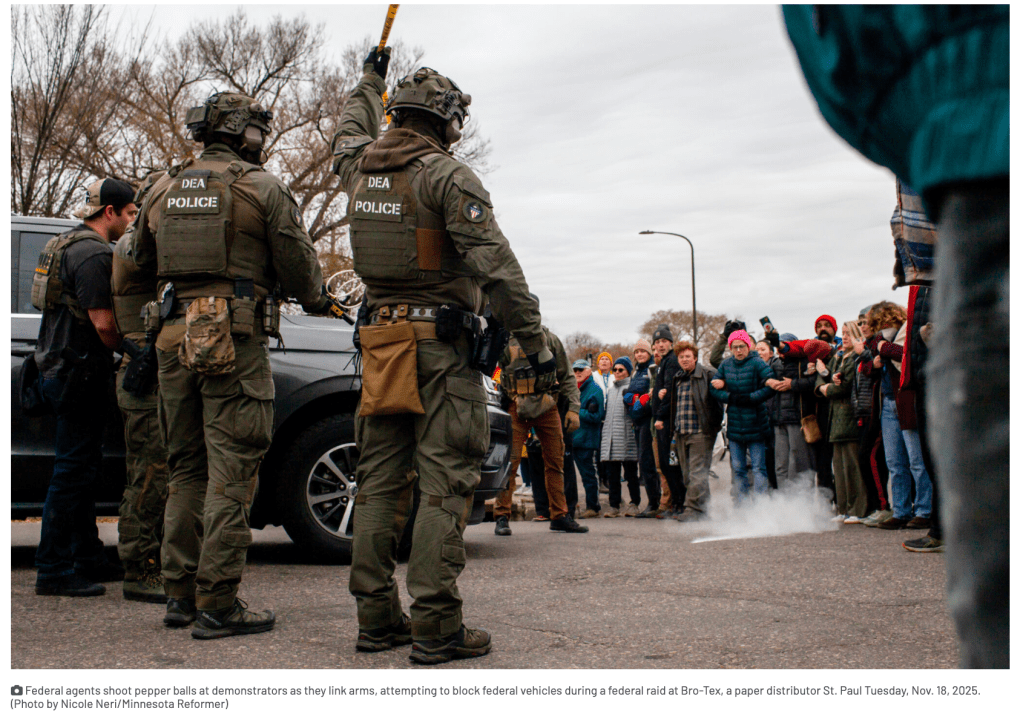
As I mentioned in my last installment, the federal government has been increasing its surveillance of activist groups that focus on immigration and more. There are numerous accounts of the Trump Administration working to limit the rights of Americans to assemble and observe federal agents in order to document their actions, or what I call “peaceful witnessing.”
At the same time, the federal government has also begun investigating climate activists. Two separate groups that employ confrontational (but peaceful) tactics to gain attention to the climate crisis–Extinction Rebellion and Climate Defiance–are being investigated by the FBI and the DOJ.
These efforts to limit dissent and criminalize protest is a page right out of the autocrat’s handbook.
This type of repression is not new. It is a standard tactic used to slow down social movements when they threaten those in power. Over the course of US history, there are numerous cases where intimidation and surveillance did not discourage activism; it backfired and mobilized more people to join the struggle.
Throughout the Civil Rights Movement, movement leaders and groups were investigated and surveilled by the FBI, which aimed to discredit, disrupt, and destroy the movement. Similar tactics were also used to deter LGBTQ Americans and the political organizations working to protect them.
Nevertheless, these struggles continued and the movements grew.
As long as we have a relatively functioning democracy, this type of repression will have the opposite of its intended effect: it will draw more attention to the movement and to the activists’ struggle.
In less democratic societies, however, activists risk much more. Research documents that hundreds of environmental defenders are murdered each year in attempts to stop their activism. Right now, indigenous activist Daria Egereva–the co-chair of the International Indigenous Peoples Forum on Climate Change–is being held in a Russian jail for her climate advocacy.
For now, though, activists in the US should be taking advantage of all the opportunities they have to draw attention to our dwindling rights by exercising them while we still can.
 Dana R Fisher
One response to “Why Targeting Activists Will Backfire”
[…] write a lot about protest and the ways that repression can escalate violence and lead to more disruptive tactics. So, I was delighted to read these recently published papers that help us understand more about the […]
LikeLike