
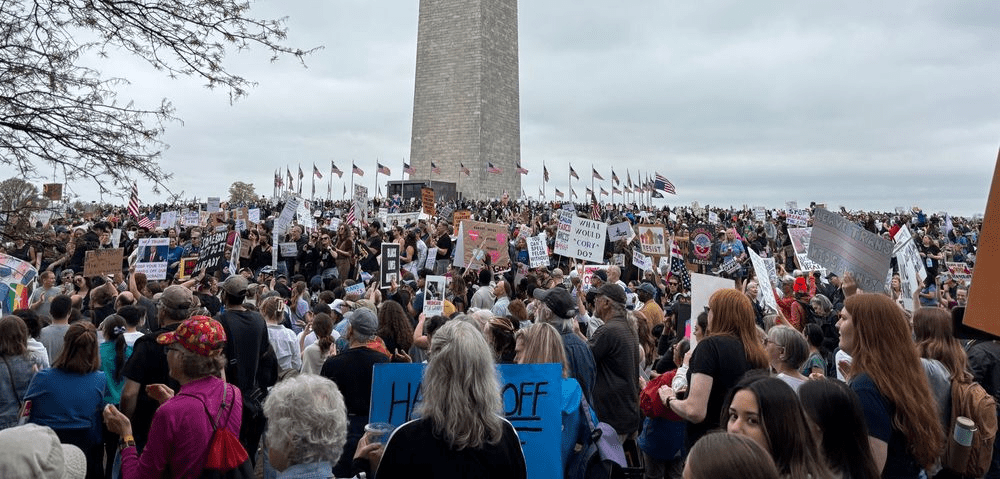
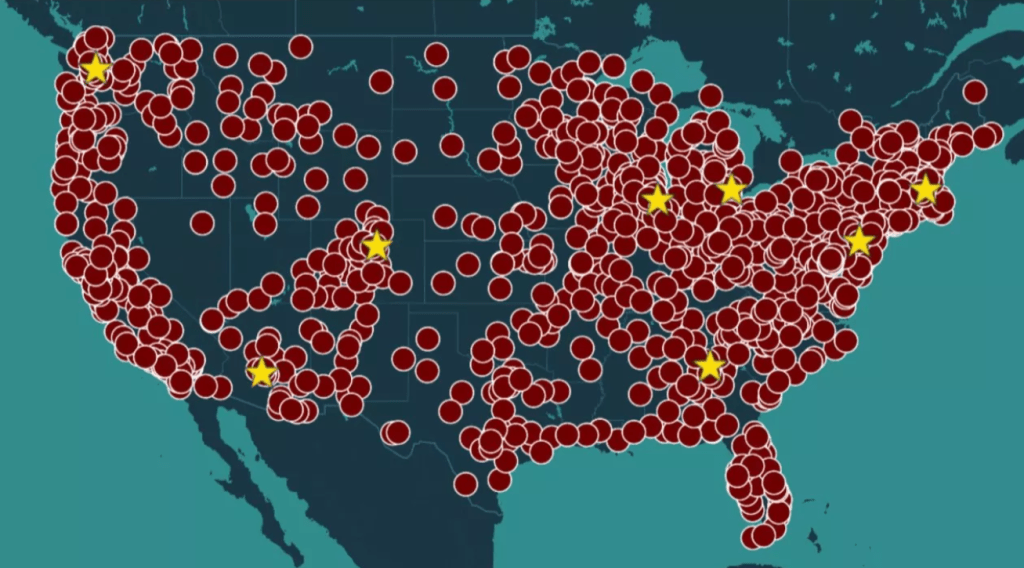
This weekend, a coalition of left-leaning groups lead by Indivisible, 50501, and the Women’s March coordinated the HandsOff2025 day of action that included over 1000 events in all 50 states. One of the lead organizers reported over 5 million people participating across the US.
We fielded a team of 8 to collect a random sample of participants at the rally in Washington, DC on April 5th and survey them. The findings provide some interesting insights into who is participating in Resistance2.0, what is motivating them, and what we can expect moving forward.
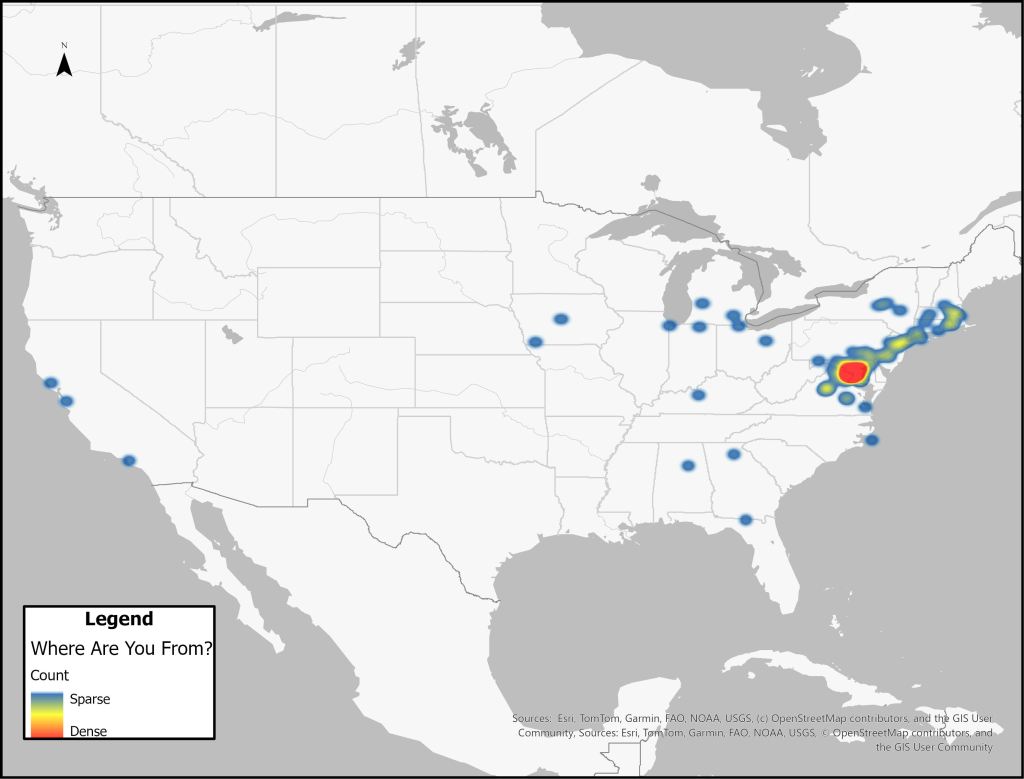
Participants traveled from around the US to join the event. Since events were being held across the US, though, the majority of participants came from the DC area and from the Northeast Corridor.
Like Resistance1.0 during the first Trump Administration, the folks who participated in Saturday’s event were mostly female, predominantly white, highly educated and middle-aged (the mean age was 49 years-old and the median age was 51). In comparison to the first Women’s March in 2017, HandsOff2025 in DC was less female, more white, and quite a bit older.
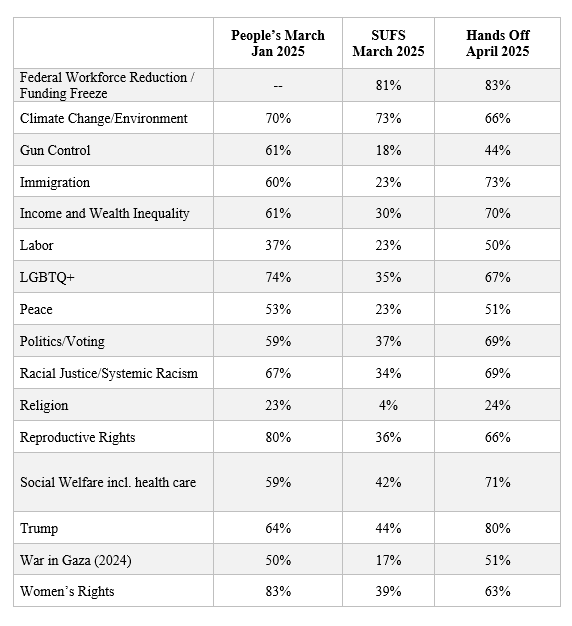
Top motivations for participating this time around were the Federal Workforce Reduction / Funding Freeze, Trump, Immigration, Social Welfare (including healthcare), and Income and Wealth Inequality. Here are the motivations in comparison to other recent protests in DC:
We continue to ask participants about their support for political violence using a question adapted from the American Values Survey. Data collected at this event were consistent with the high levels reported at the Stand Up for Science Event in March 2025.


4 responses to “Resistance 2.0 Rises at the #HandsOff Rallies”
[…] Is that true? Have recent protests skewed older? According to survey research by Dana Fisher’s team at the Hands Off gathering in DC on April 5, yes: […]
LikeLike
[…] available in our May data, we estimate that millions of people participated in protests in April. Dana Fisher’s survey evidence from D.C.-area protests on April 5 suggests that Resistance 2.0 skews older […]
LikeLike
[…] available in our May data, we estimate that millions of people participated in protests in April. Dana Fisher’s survey evidence from D.C.-area protests on April 5 suggests that Resistance 2.0 skews older […]
LikeLike
[…] in our May data, we estimate that millions of people participated in protests in April. Dana Fisher’s survey evidence from D.C.-area protests on April 5 suggests that Resistance 2.0 skews […]
LikeLike